





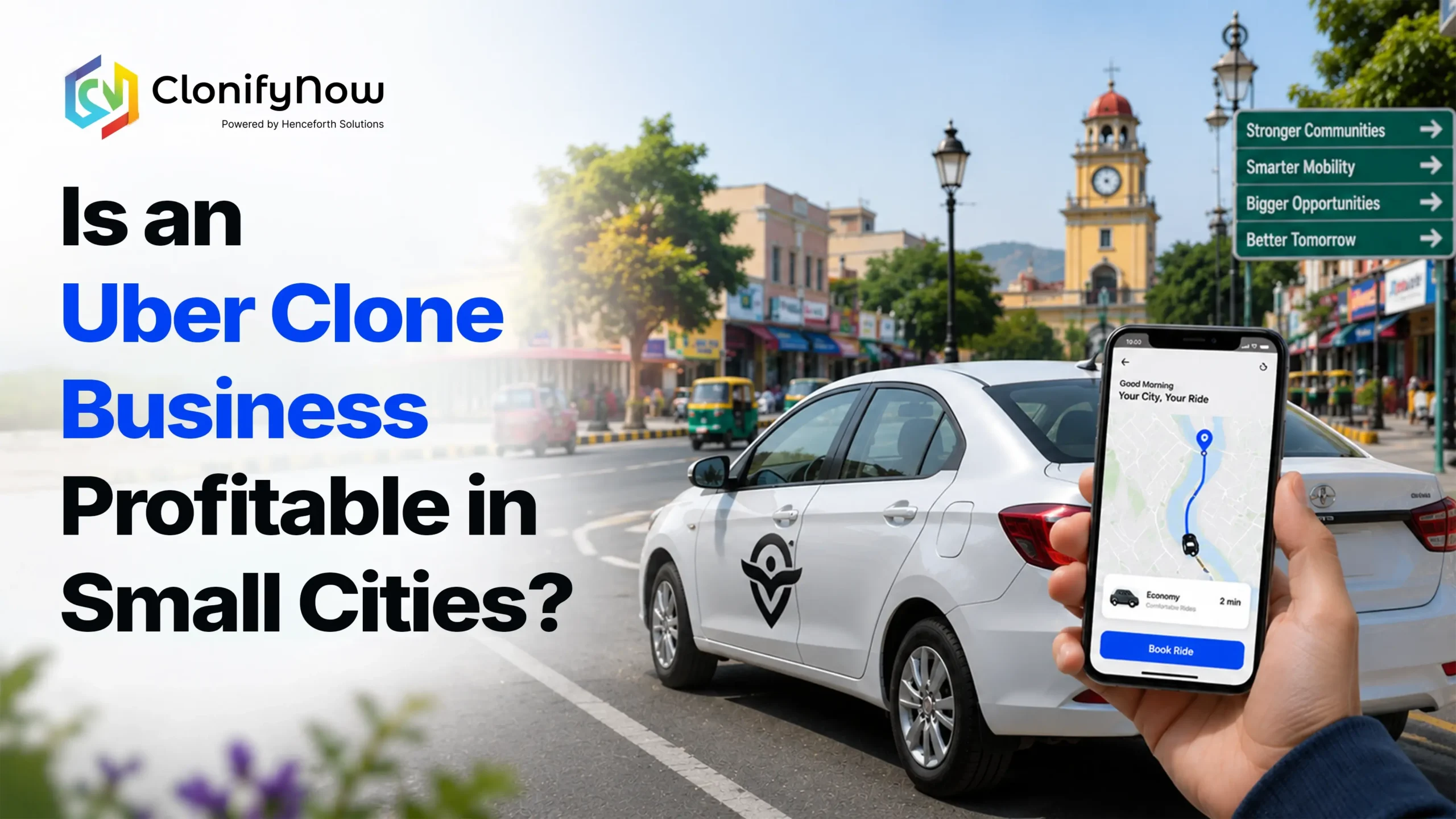
Ask most entrepreneurs about on-demand mobility and their minds jump straight to the usual suspects: New York, London, Mumbai, Tokyo. That’s where the big ride-hailing names built their empires. But here’s the thing: those same billion-dollar companies routinely ignore mid-sized towns, regional hubs, and suburban centers. That gap is exactly where local operators can walk in and win.
Launching an Uber clone business in a smaller market is quietly becoming one of the smarter plays in the gig economy right now. Tailor the service to your region’s actual demographics, and you can build something close to a local monopoly. Platforms built by providers like ClonifyNow make this realistic for a small team; you get a working dispatch system quickly, without footing the bill to build software from scratch.
According to the World Bank, only about 20 Indian cities with populations above 500,000 have organized public transport systems. This leaves many Tier-2 and Tier-3 cities with transportation gaps, creating opportunities for app-based taxi services and Uber clone businesses to meet local mobility needs.
So if you’re weighing whether a regional transport venture can actually pay off, here’s a practical look at the market forces, the unit economics, the advantages you have as a local player, and what a real rollout looks like.
Uber Clone Business in Small Cities Market Potential
To understand why secondary and tertiary markets are such fertile ground, you have to look past population totals and pay attention to what’s actually missing. Small cities don’t have subway systems. Bus networks are often spotty or unreliable. Local taxi services tend to be scattered and stuck using outdated methods.
That’s the opening. An Uber Clone Business in Small Cities isn’t fighting for scraps in an oversaturated market; it’s filling an obvious, structural gap. Demand is already there and pent up; the competition simply isn’t.
Big tech stays out of your way
Global ride-hailing giants need massive scale to justify their overhead, so in smaller cities they tend to run thin; few drivers, long waits, spotty coverage. A local operator who actually recruits drivers and guarantees availability can grab market share almost immediately.
Costs stay low
Landing riders and drivers in a major metro means expensive ads and heavy subsidies. In a small town, word of mouth and local social networks do a lot of the work for you, so customer acquisition costs drop and you reach profitability faster.
People root for the local guy
Regional customers like backing a business that understands their town. Lean into local branding, sponsor community events, partner with local shops; that builds a kind of loyalty that an outside corporation just can’t replicate.
Core Drivers of Uber Clone Profitability
Running a platform like this means you’re not managing a fleet of cars; you’re managing transactions. That shift is what makes the model so capital-efficient and, done right, so profitable.
At its core, an Uber clone business makes money by connecting riders who need a trip with drivers who have a car and time to spare. You’re the bridge. But real profitability comes from stacking a few revenue streams on top of the basic ride fee, not relying on just one.
Commission on every ride
This is your bread and butter; typically 15–25% of each fare. Since booking, dispatch, tracking, and payments are all automated, your cost per additional ride is close to nothing once the platform is running.
Surge pricing around local events
Graduations, sports tournaments, concerts, weekend nightlife; small cities have predictable demand spikes too. Automated surge pricing lets you capture more revenue during those windows while still paying drivers well.
Corporate and hotel contracts
Hotels, corporate offices, medical centers, and event venues will pay for reliable, dedicated transport for guests and staff. Set up a dispatch portal for them, and you’ve got steady, high-margin business. ClonifyNow, for instance, includes corporate portal tools for centralized billing and recurring invoices.
In-app ads and local sponsorships
For entrepreneurs focused on starting your ride-hailing business in your own city, these additional revenue opportunities can make a significant difference during the early stages.
Building a Modern On-demand taxi app for Local Transport
None of this works without solid technology behind it. Riders expect the app to just work: accurate GPS, real-time tracking, smooth digital payments. A well-built on-demand taxi app puts a small local startup on the same technical footing as the giants, which is the whole point.
To win over regional customers, a few things aren’t optional:
Real-time GPS and smart routing
Riders want to see exactly where their driver is and when they’ll arrive, and ideally share that trip with family. Good routing also means less fuel burned and faster turnaround for drivers.
Flexible Payment Integration for Regional Users
Urban professionals live on cards and digital wallets. Regional users often still want cash on the table. Support all three, or you’re leaving customers behind.
Automated dispatch and demand heatmaps
The system should send each request to the closest available driver automatically, and give admins a live view of where demand is clustering so drivers can be nudged toward busy areas before a surge hits.
Safety features that are actually enforced
Driver document checks, background verification, two-way ratings, and an in-app SOS button. In a small city, word travels fast; one safety failure can undo months of trust-building.
Strategic Execution for Uber Clone Profitability and Scalability

Good software gets you halfway there. The rest comes down to execution; Uber Clone Profitability requires recruiting drivers, marketing locally, and building a brand people recognize.
The goal is a self-reinforcing loop: more drivers means shorter wait times, which brings in more riders, which in turn attracts more drivers. Deploying your business model using the proven Uber Clone Business in Small Cities blueprint involves following clear execution steps.
Make it easy to say yes as a driver
Offer a strong intro deal; waived commission for the first month is common, plus referral bonuses for drivers who bring in others. Daily cash-out options matter too; drivers value getting paid same-day far more than waiting for a biweekly payout.
Market like a local, not a corporation
Skip the expensive ad agency. Sponsor a local radio spot, hand out promo codes on a college campus, put QR code flyers in bars and restaurants, work with a local influencer or two. A simple first-ride discount, promoted locally, tends to drive adoption faster than any paid campaign.
Expand once you’re stable
Entrepreneurs comparing the ROI of an Uber clone vs custom build should also consider long-term scalability. A ready-made platform typically reduces development time, lowers maintenance costs, and allows operators to invest more resources into driver acquisition and local marketing instead of software development.
The Blueprint at a Glance
Next Steps for Launching Your On-Demand Business
On-demand mobility isn’t just a big-city game anymore. Mid-sized towns and regional hubs are one of the most underused opportunities in tech-driven business right now; lower costs to acquire customers, real local loyalty, less competition, and better margins than you’d find fighting for space in a saturated metro.
Going the Uber Clone Business means you skip years of expensive software development and debugging. Working with an established provider like ClonifyNow gets you enterprise-grade ride-hailing software, driver app, passenger app, and admin dashboard, at a fraction of what building it yourself would cost.
If you’ve been thinking about owning the transportation space in your region, there’s rarely been a better moment actually to start.
FAQs About Uber Clone Business
Is an Uber clone business profitable in small cities?
Yes, an Uber clone business can be profitable in small cities because competition is often lower, customer acquisition costs are more affordable, and there is consistent demand for reliable transportation. With the right pricing strategy, active driver network, and efficient operations, entrepreneurs can build a sustainable business in underserved markets.
How much does it cost to launch an Uber clone app?
The cost depends on factors such as the features you need, platform selection (Android, iOS, or both), branding, and customization requirements. Choosing a white-label Uber clone solution is generally more cost-effective than developing a ride-hailing platform from scratch, allowing businesses to launch faster and reduce initial investment.
What features should a ride-hailing app include for local markets?
A successful ride-hailing app should include real-time GPS tracking, automated ride dispatch, multiple payment options, fare estimation, driver and passenger ratings, trip history, push notifications, and emergency safety features. These functionalities help improve the user experience while simplifying daily operations.
How can I attract drivers to a new ride-hailing platform?
Offering competitive commission rates, quick payouts, referral rewards, and reliable ride demand can encourage drivers to join your platform. Building strong relationships with local drivers and providing responsive support also helps improve retention as your business grows.
Can an Uber clone app expand to multiple cities?
Yes. Once your operations are stable in one location, a scalable ride-hailing platform can support expansion into nearby cities without rebuilding the entire system. Using a centralized admin dashboard makes it easier to manage drivers, customers, pricing, and operations across multiple regions.


 +91-9464826889