





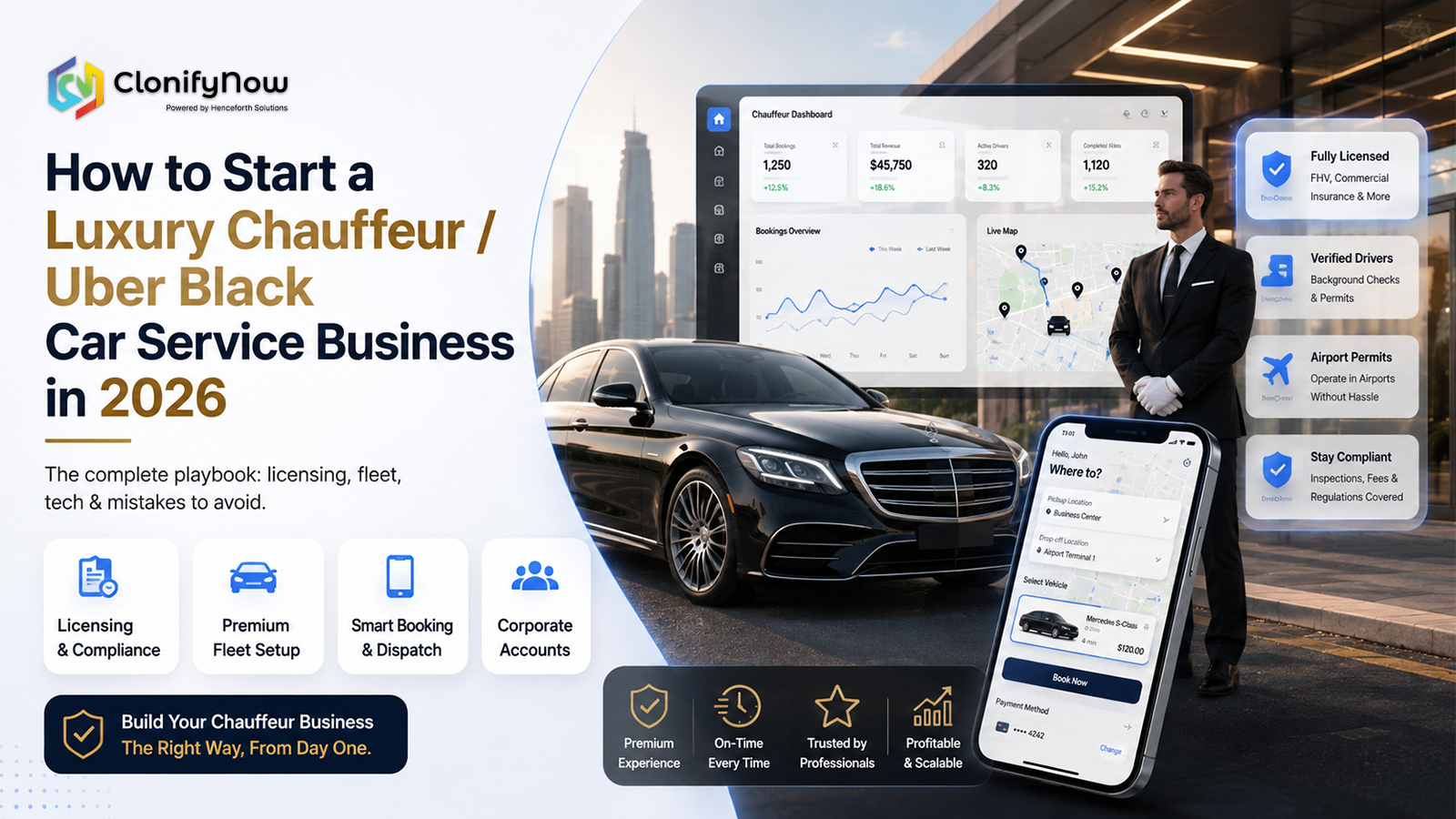
Corporate travel budgets are back, business travelers want reliability over app-hailing chaos, and cities are tightening rules around who’s allowed to operate a uber black car. That combination is exactly why 2026 is a good year to launch if you build the business correctly from day one. Here’s the real playbook: licensing, fleet, tech, and the mistakes that quietly kill new operators.
Step 1: Get the Licensing and Compliance Foundation Right
Uber Black car and chauffeur services sit in a different regulatory lane than rideshare. Most cities and states require:
- A for-hire vehicle (FHV) or livery license, separate from a standard driver’s license or a rideshare TNC permit.
- Commercial vehicle registration and commercial insurance; personal auto policies won’t cover you, and neither will basic rideshare insurance.
- Driver-specific permits, often including background checks, DMV point limits, and drug testing depending on jurisdiction.
- Airport authority permits, if you plan to service airport pickups, are usually separate applications with their own fees and vehicle inspections.
Do this research at the city and county level before you buy a single vehicle. Rules vary enormously between, say, NYC’s TLC, Chicago’s licensing division, and a smaller metro with looser oversight. Budget both time (permits can take 60–90 days) and money (application fees, inspections, insurance premiums) into your launch runway.
Step 2: Source Your Fleet the Right Way
You don’t need ten vehicles to launch. Most successful chauffeur services start with two or three well-maintained, late-model sedans or SUVs think Mercedes S-Class, Cadillac Escalade, or similar and scale from there.
Decide early between:
- Buying outright: better long-term economics, but ties up capital.
- Commercial leasing: lower upfront cost, predictable payments, easier to refresh the fleet every 3–4 years to keep the “luxury” promise intact.
- Owner-operator contracts: you bring the bookings and branding, drivers bring their own compliant vehicles. Faster to launch, but harder to control the guest experience.
Whichever route you choose, luxury positioning lives or dies on vehicle condition. A five-year-old Escalade with worn leather won’t justify premium pricing, no matter how good your marketing is.
Step 3: Choose Your Booking & Dispatch Platform Clone vs. Custom Build
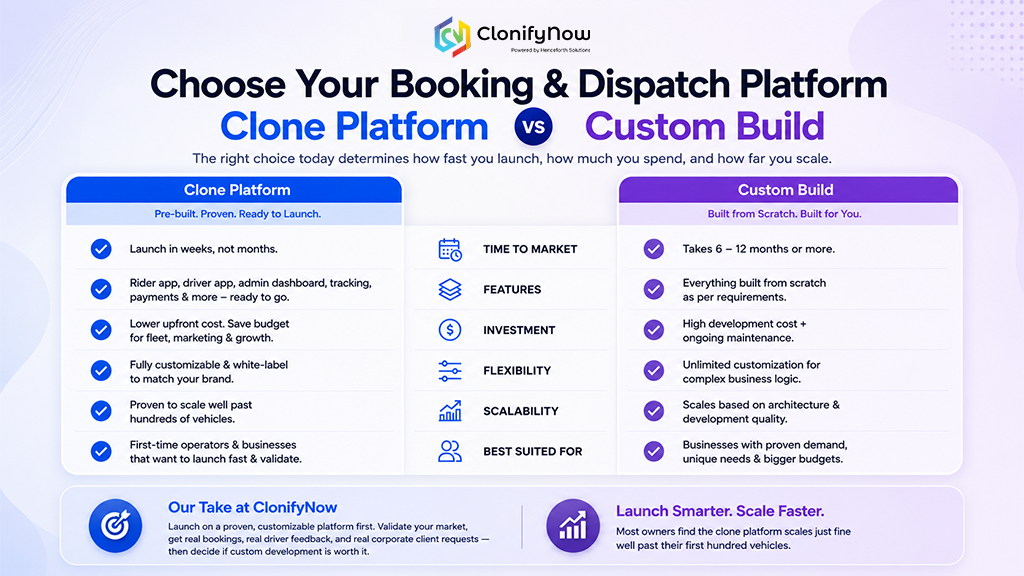
This decision affects your launch timeline more than almost anything else.
A clone-based platform (a pre-built booking, dispatch, and driver app system modeled on proven uber black car and ride-hailing platforms) gets you live in weeks, not months. You get rider apps, driver apps, an admin dashboard, live tracking, and payment processing already built and tested you’re customizing and branding, not engineering from scratch. For a first-time operator, this is almost always the smarter move: it preserves cash for fleet and marketing instead of burning it on software development.
A custom build makes sense once you have proven demand, unique operational requirements (say, multi-city dispatch logic or a loyalty program no off-the-shelf platform supports), and the budget for a dev team and ongoing maintenance. Building from zero typically means 6–12 months and a much larger burn before you’ve booked a single ride.
Our take at ClonifyNow: launch on a proven, customizable platform first. Validate your market, get real bookings, real driver feedback, and real corporate client requests, then decide if custom development is actually worth it. Most owners find the clone platform scales just fine well past their first hundred vehicles.
Step 4: Your First 90 Days
- Days 1–30: Finalize licensing applications, lock in insurance, select your platform, and start driver recruitment and vetting.
- Days 31–60: Onboard your first 2–3 vehicles and drivers, complete platform setup and branding, and start local B2B outreach to law firms, real estate agencies, event planners, and hotel concierge desks.
- Days 61–90: Launch publicly, run a soft-launch promotion for early corporate accounts, and start collecting reviews and referral business.
The Mistakes That Sink New Business Owners
- Underpricing. New owners panic-price against rideshare rates to win early bookings, then can’t cover insurance, maintenance, and driver pay. Pricing for the premium experience you’re delivering to your clientele isn’t comparing you to a $12 rideshare trip.
- Skipping driver vetting. In a luxury service, the driver is the product. Background checks, defensive driving training, and professional presentation standards aren’t optional extras; they’re the entire value proposition.
- No corporate accounts. Individual bookings are unpredictable. Corporate accounts law firms, executive travel desks, event companies provide recurring, high-margin revenue and far better client retention. Waiting to pursue them until “the business is more established” means leaving your most stable revenue stream on the table for months.
- Ignoring insurance and compliance details. A single uninsured incident, expired permit, or misclassified driver can shut you down or bankrupt you. Compliance isn’t a launch checkbox; it’s an ongoing operational discipline.
Build Corporate Billing In From Day One
Here’s the mistake almost every new founder makes: they launch consumer-first and treat corporate clients as an afterthought, bolting on invoicing and account management once demand shows up. By then, you’re retrofitting a system that wasn’t built for manual invoices, no centralized billing, and no visibility for corporate admins into ride history and spend.
Corporate clients expect monthly invoicing, multiple authorized riders under one account, spend reporting, and dedicated account management from the start. If your platform can’t support corporate accounts, tiered billing, and reporting on day one, you’ll lose exactly the clients who generate your most reliable revenue right as they’re evaluating you against competitors who already have it figured out.
Build the corporate account infrastructure into your launch, not your roadmap. It’s the difference between a uber black car service that survives its first year and one that becomes the go-to for law firms, real estate teams, and executive travel in your market.
Looking to launch faster with a proven, customizable booking and dispatch platform? ClonifyNow builds white-label ride-hailing and chauffeur platforms designed for corporate accounts from day one.


 +91-9464826889