





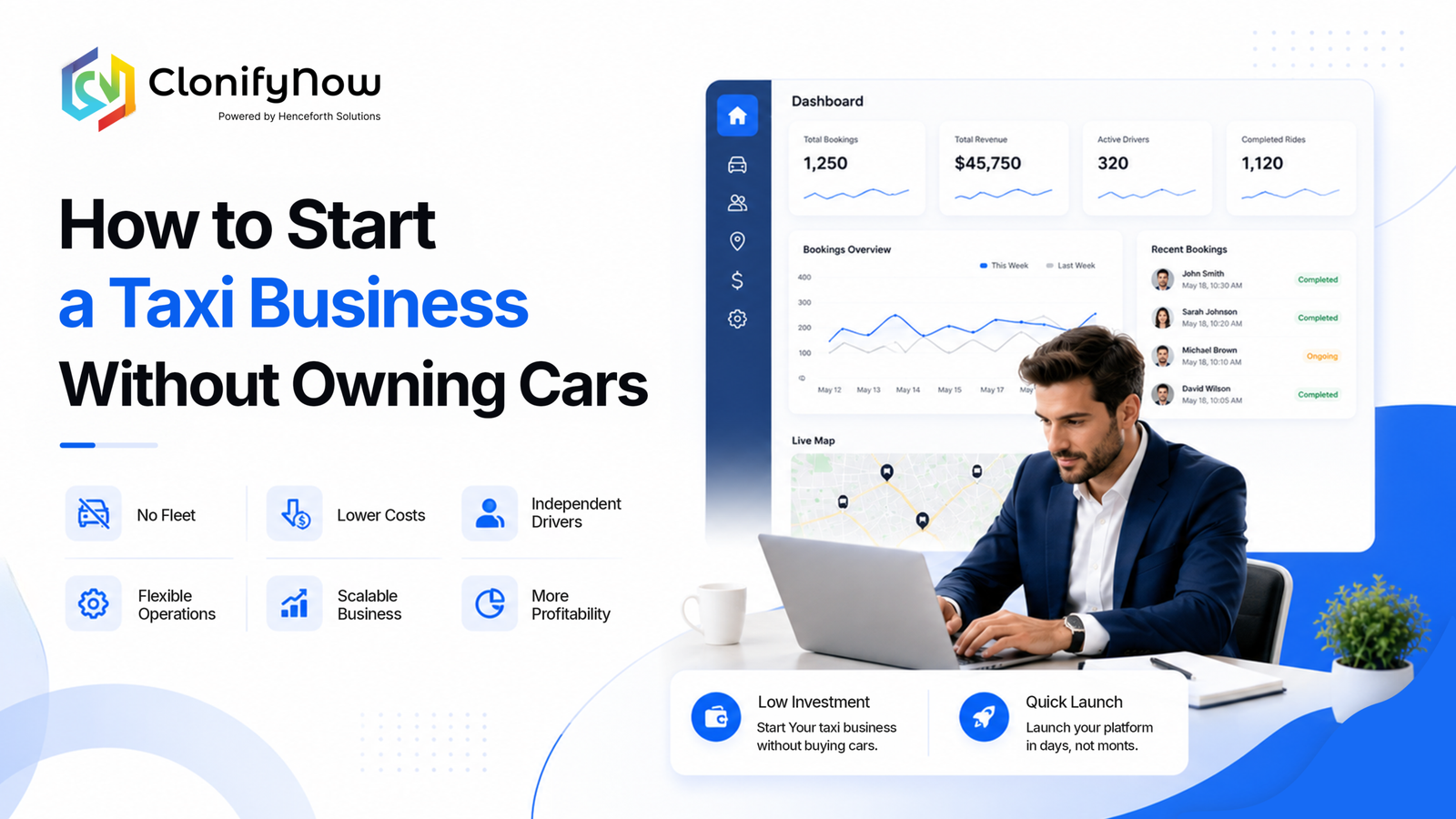
Ten years ago, if you wanted to run a cab company, you needed a fleet. That meant buying vehicles outright, renting garage space, keeping mechanics on payroll, and writing big checks for insurance every quarter. It was a capital-heavy game, and most people simply couldn’t afford to play.
Figuring out how to start a taxi business without cars is really about learning to run a lean, digital-first operation that can expand into new cities without dragging a warehouse of depreciating assets behind it.
Did you know? The global ride-hailing market is projected to grow from $315.49 billion in 2026 to $716.64 billion by 2034, creating a massive opportunity for entrepreneurs to launch taxi platforms using independent drivers instead of owning a fleet.
At ClonifyNow, we give founders the dispatch infrastructure: bookings, routing, payments, all of it. So they can put their money where it actually pays off: getting customers, onboarding drivers, and building a brand people trust.
What the Modern Taxi Business Model Actually Looks Like
Strip it down, and this business is a two-sided marketplace that demonstrates how a two-sided marketplace model works without owning vehicles. The technology layer that connects riders who need a lift with drivers who already have a vehicle sitting in their driveway. This taxi business model turns what used to be fixed costs (loan payments, insurance premiums, garage rent) into variable costs that rise and fall with how many rides you’re actually running.
Core Pillars of Asset Light Operations
- Driver Supply Network: Independent vehicle owners and local private drivers supply the physical cars while maintaining responsibility for individual fuel, maintenance, and vehicle insurance.
- Automated Digital Dispatch: Software algorithms analyze rider locations and instantly assign trip requests to the nearest available driver to optimize response times.
- Direct Passenger Booking Channels: User-friendly mobile interfaces and web portals allow customers to request rides, view upfront pricing, and track drivers in real time.
- Cashless Payment Gateways: Integrated payment processing automatically collects passenger fares, distributes driver payouts, and retains platform commissions without manual intervention.
Why This Shift Matters So Much
Cut out vehicle ownership, and you cut out the worst part of the old taxi model: cars sitting idle in a lot during slow hours, still costing you money. When ride volume drops, your costs drop with it, because no loan payment or maintenance bill is hanging over your head. When demand spikes, you don’t need to scramble; more drivers simply log in and start picking up rides.
Why a Taxi Business Startup Built This Way Tends to Be Profitable
For founders starting from scratch, this is one of the quickest routes to recurring revenue in the on-demand space. A taxi business without cars knocks down most of the traditional barriers to entry; you can realistically go from idea to launch in weeks, not years.
Drastic Reduction in Initial Capital Expenditure
- Zero Vehicle Depreciation Costs: Motor vehicles lose significant value every year. By avoiding vehicle ownership, your capital remains protected from asset depreciation.
- Minimal Maintenance and Insurance Overhead: Maintenance, tire replacement, routine servicing, and fleet insurance policies are borne by individual vehicle owners rather than your corporate balance sheet.
- Reduced Physical Infrastructure: You do not need physical garages, large parking lots, or dedicated mechanic bays, allowing your corporate team to operate remotely or from flexible co-working spaces.
Taxi Business Startup scales in a way fleet-based businesses simply can’t. Expanding into a new market becomes a matter of recruiting local drivers and running a targeted marketing push, no shipping vehicles, no setting up regional repair shops. That’s what makes it repeatable across city after city.
Where the Uber Clone App Fits Into All of This
Once you remove vehicles from the equation, your technology stack becomes the actual product. It’s your competitive edge. Building on a solid Uber clone app means you’re offering the same polished, enterprise-level ride experience that the big players offer, without spending years building it from zero.
Essential Features for Passenger Engagement
- Instant Fare Estimates: Advanced algorithms calculate dynamic trip costs upfront based on distance, estimated travel time, and current market demand.
- Live GPS Tracking: Passengers enjoy peace of mind by viewing their driver moving toward the pickup location on an interactive map.
- Flexible Payment Solutions: Integrated support for credit cards, digital wallets, local payment gateways, and in-app cash tracking ensures effortless checkouts.
- Two-Way Rating Systems: Passengers and drivers rate each other after every trip, creating a self-policing network that maintains high service quality.
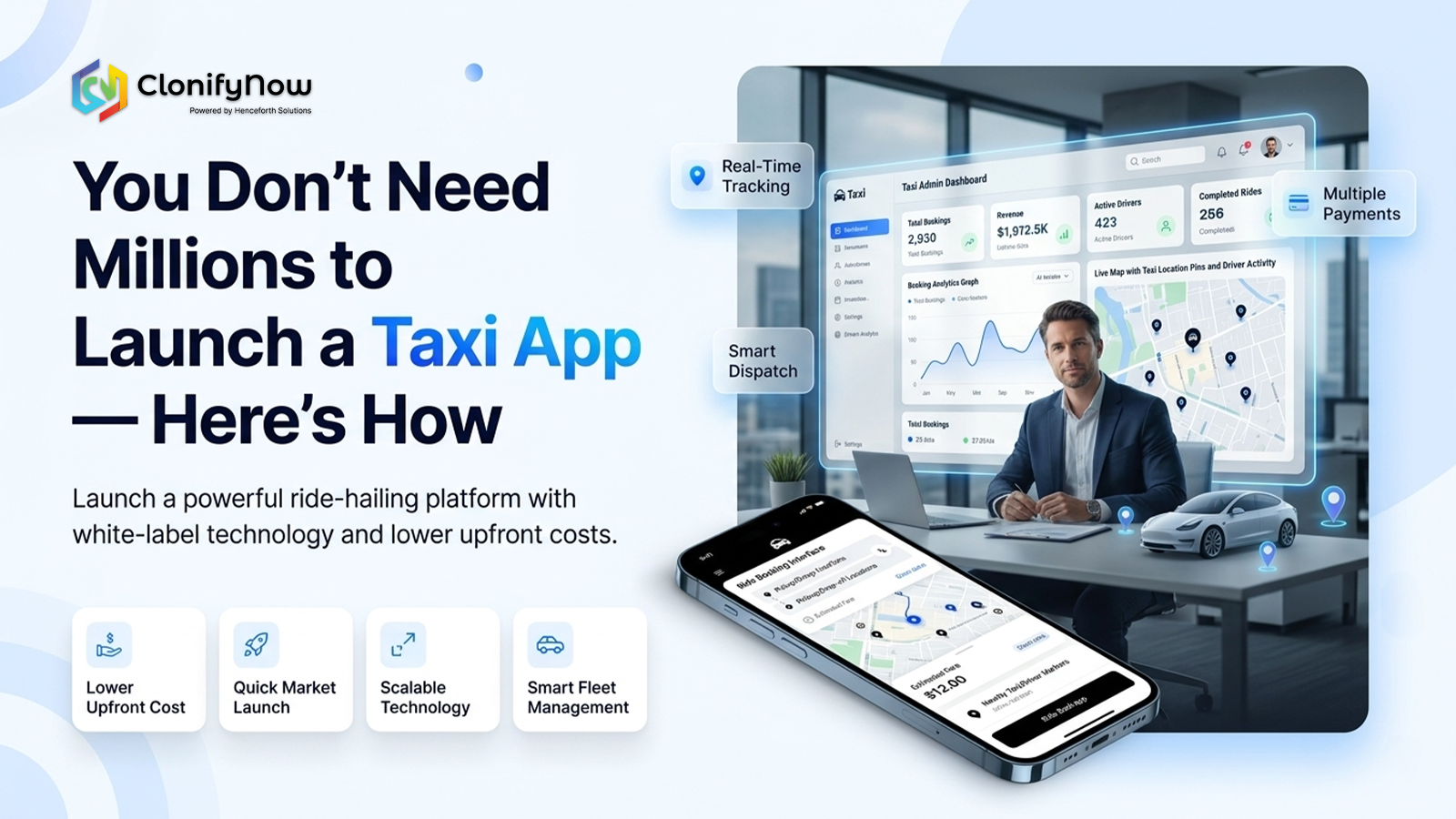
On the operations side, a solid white-label setup from ClonifyNow hands your admin team a real-time dispatch dashboard, tools to verify driver compliance, automatic commission calculations, and promo controls for discounts. Starting from proven, already-tested software like Uber Clone App saves serious time off your development timeline; you’re not reinventing the wheel, you’re deploying something that already works.
Step-by-Step Execution for Your Taxi Business Startup

None of this happens by accident. It takes a real plan: recruiting drivers systematically while running marketing that actually targets your local market, if you want to grab share fast without sacrificing service quality.
Local Market Analysis and Niche Identification
- Mapping Underserved Routes: Identify suburban neighborhoods, airport corridors, nightlife districts, or university zones where existing taxi services exhibit long wait times or poor reliability.
- Targeting Specialized Transportation Needs: Differentiate your service by catering to niche segments such as non-emergency medical transportation, pet-friendly rides, executive airport shuttles, or corporate commuter pools.
Driver Onboarding and Compliance Protocols
- Verification Standards: Establish rigorous background checks, driving record evaluations, vehicle age restrictions, and mandatory physical inspection requirements.
- Fleet Owner Partnerships: Partner with local car rental agencies, private fleet operators, and limousine companies to quickly onboard dozens of qualified vehicles simultaneously.
- Driver Retention Incentives: Attract quality drivers by offering competitive commission structures, instant daily payouts, flexible working schedules, and performance bonuses.
Deploying White Label Technology Infrastructure
Deploying your digital booking platform is the final operational bridge. Running a sustainable Taxi Business Without Cars requires real-time synchronization between passenger requests and driver availability. Implementing automated dispatch software ensures optimal driver assignment, eliminates human dispatch error, and maintains reliable service delivery even during peak demand periods.
Maximizing Revenue with Your Taxi Business Model
An asset-light enterprise benefits from clean, predictable revenue architecture. Because your operational overhead remains low, a well-structured Taxi Business Model turns a substantial percentage of total platform volume directly into net profit margin.
Multiple Streams of Income Generation
- Per Trip Commissions: Retain a fixed percentage (typically 15% to 25%) of every completed fare processed through your platform.
- Dynamic Surge Pricing: Automatically raise fare rates during inclement weather, high-demand rush hours, major sports events, or holiday celebrations to boost overall margin.
- Corporate Account Billing: Sign contracts with local hotels, corporate offices, event venues, and travel agencies to provide priority business transportation on monthly billing terms.
- In-App Advertising: Partner with local restaurants, retail brands, and entertainment venues to display targeted digital promotions inside your rider application.
Playing the Long Game
Real growth in this space comes down to trust, visibility, and constantly improving the experience riders and drivers actually have. A capable Uber clone app gives you the technical foundation to grow from a single city into a nationwide network without your infrastructure buckling under the pressure.
Running a profitable taxi business without cars isn’t something only massive tech companies can pull off anymore. With ready-to-deploy technology from ClonifyNow, founders can put their energy where it counts, building driver relationships, growing the brand locally, and bringing in customers. In this market, the businesses that win are the ones that own the customer relationship and make getting from A to B feel effortless.
FAQs About Taxi Business Without Cars
Can I start a taxi business without owning any vehicles?
Yes. You can launch a taxi business by partnering with independent drivers and using a white-label taxi app to manage bookings, dispatch, payments, and commissions.
How much does it cost to start a taxi business without cars?
Costs are significantly lower than traditional taxi businesses because you avoid vehicle purchases, fleet maintenance, garage rentals, and commercial fleet insurance expenses.
Is an Uber clone app necessary for a taxi business startup?
An Uber clone app is not mandatory, but it provides essential features like GPS tracking, automated dispatch, digital payments, driver management, and real-time ride monitoring.
How do taxi businesses make money without owning cars?
Most asset-light taxi businesses earn through ride commissions, surge pricing, subscription plans, corporate transportation contracts, and in-app promotional partnerships with local businesses.
What is the biggest challenge when starting a taxi business without vehicles?
The biggest challenge is building a reliable driver network and attracting consistent passenger demand through effective local marketing, customer support, and efficient dispatch technology.


 +91-9464826889