





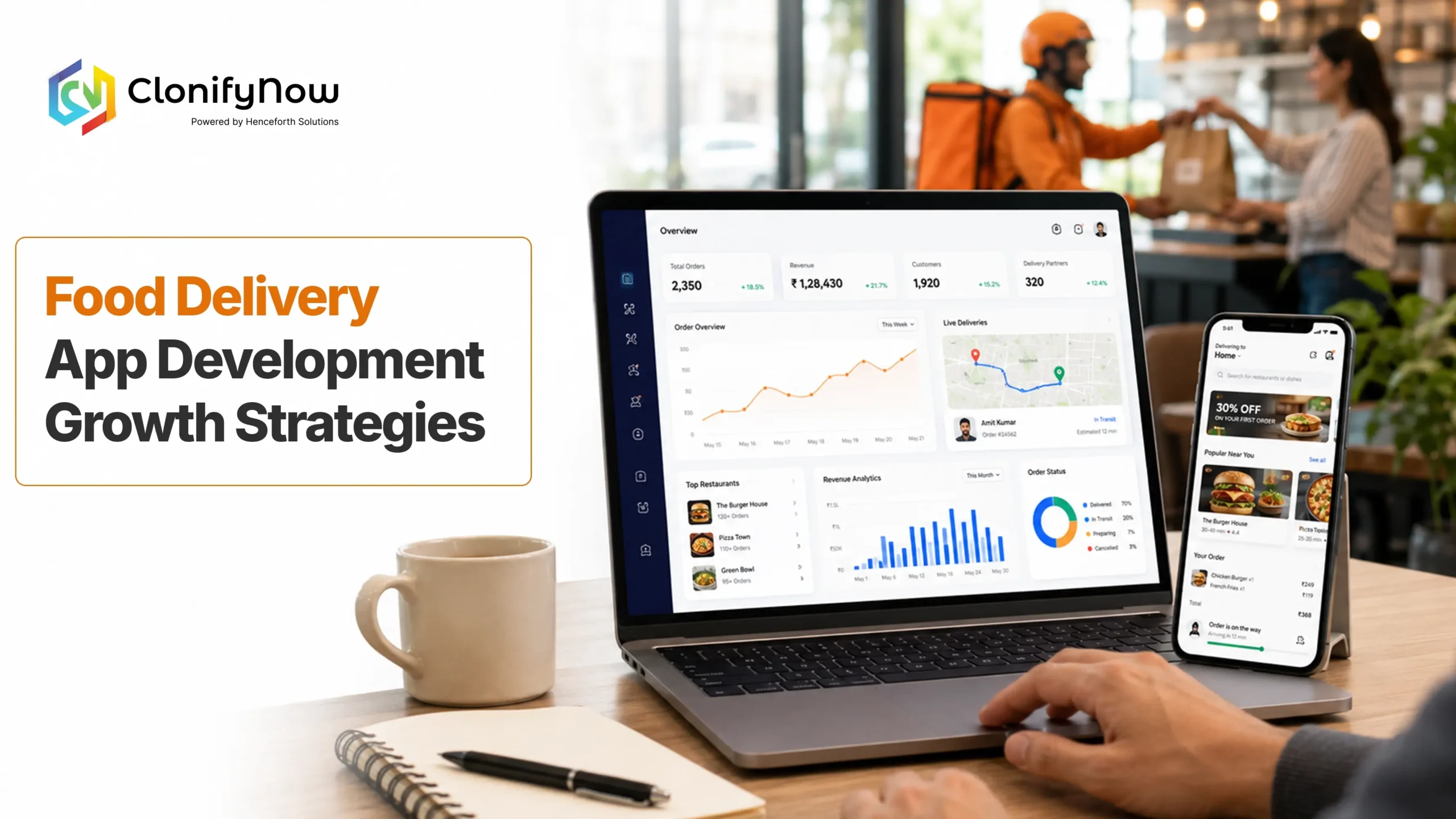
The global food delivery industry has transformed from a luxury service into an essential daily utility. For startup founders, enterprise decision makers, and industry professionals, the potential for massive revenue in the space is huge. In such a competitive environment, the success of your food delivery app depends on implementing effective food delivery app development strategies that focus on increasing customer acquisition and simplifying logistics.
Did you know? Around 8 in 10 delivery customers prefer ordering through a smartphone app, and 76% of restaurant operators say technology gives them a competitive edge. This highlights why investing in scalable food delivery app development is no longer optional—it’s a key growth strategy for modern food businesses.
To scale in a sustainable way, businesses need to choose a reliable technology partner. You can trust that, when you partner with a dedicated development company like ClonifyNow, your platform will be built on a scalable, high-performance foundation designed specifically for fast-growing markets.
Food delivery app development services to scale your operations
A food delivery business is a platform that connects customers, restaurant partners, and delivery fleets in a seamless manner. With professional food delivery app development services, companies can implement custom software architectures to streamline workflows, cut delivery time, and boost profit margins.
The four essential pillars of a food delivery ecosystem
- Customer application
The customer-facing app is all about conversions and customer retention. It includes advanced filters, real-time order tracking, predictive delivery times, and a streamlined, frictionless checkout process.
- Merchant dashboard
They require a simple interface to handle live orders, update menu availability in real time, implement dynamic pricing during peak hours, and analyze daily income statistics.
- Driver application
We require a dedicated driver application to be the logistics backbone of the business with intelligent GPS-driven route optimization, earnings dashboards, real-time order broadcast alerts, and rapid in-app communication channels.
- Centralized admin panel
The main control center of the platform owners gives an overview of all operations. It allows marketing executives and admins to manage commissions, run targeted promotional campaigns, resolve disputes, and track system metrics.
ClonifyNow gives food delivery app development services with end-to-end testing, UI/UX enhancements, and continuous support to secure your technical infrastructure.
Choosing the right business architecture
| Business Model | Target Audience | Primary Revenue Stream | Operational Complexity |
| Single Restaurant | Local loyal customers | Direct food sales | Low (Internal staff handles logistics) |
| Restaurant Chain | Multi-location diners | Franchise sales & cross-selling | Medium (Centralized inventory tracking) |
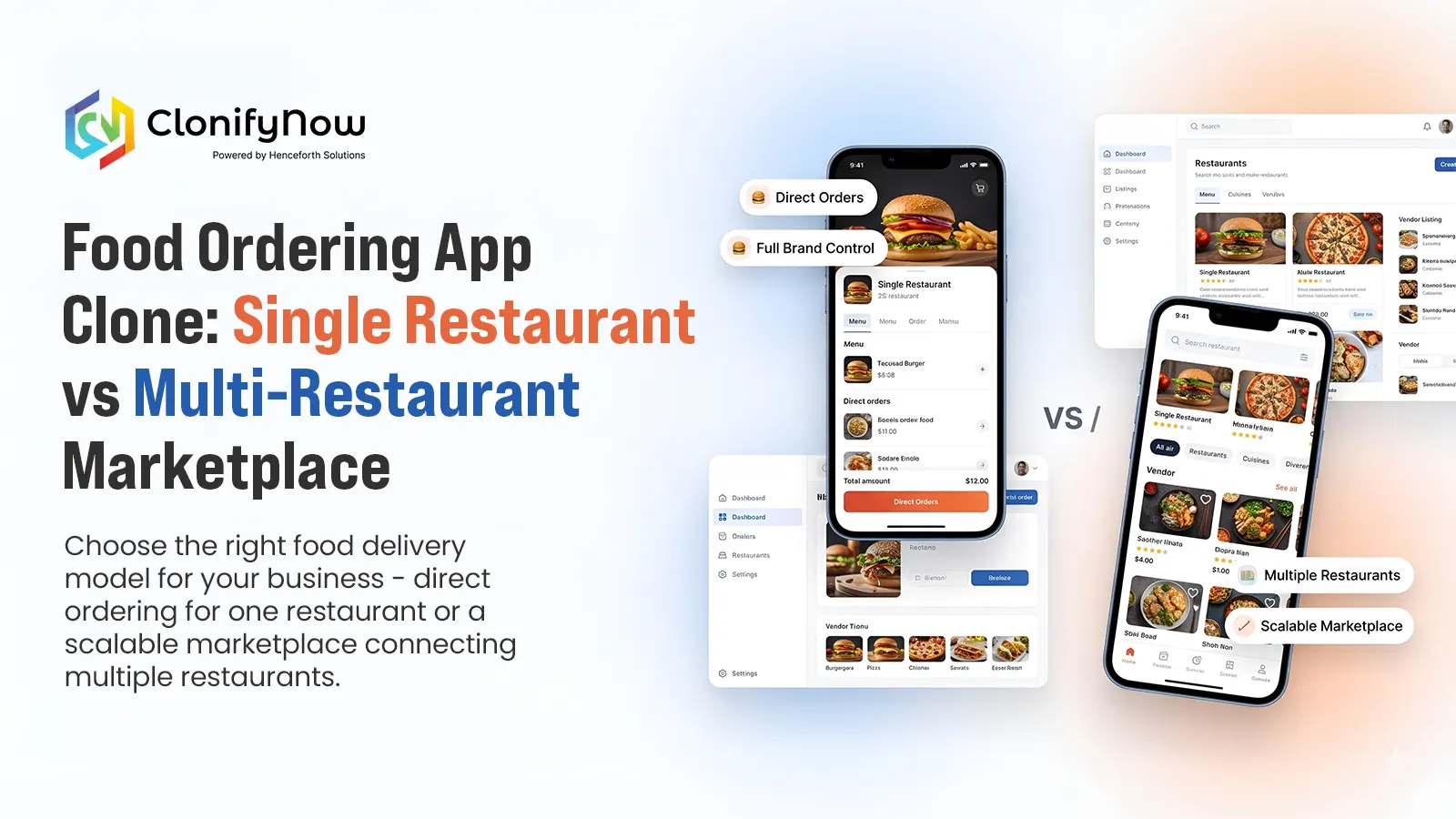
| Aggregator Marketplace | Broad regional consumers | Order commissions & ad placements | High (Requires advanced automated matching) |
| Cloud Kitchen Network | Delivery-only demographics | Shared overhead & high-margin brands | Medium (Focused entirely on culinary output) |
On demand food delivery app development features that drive user retention
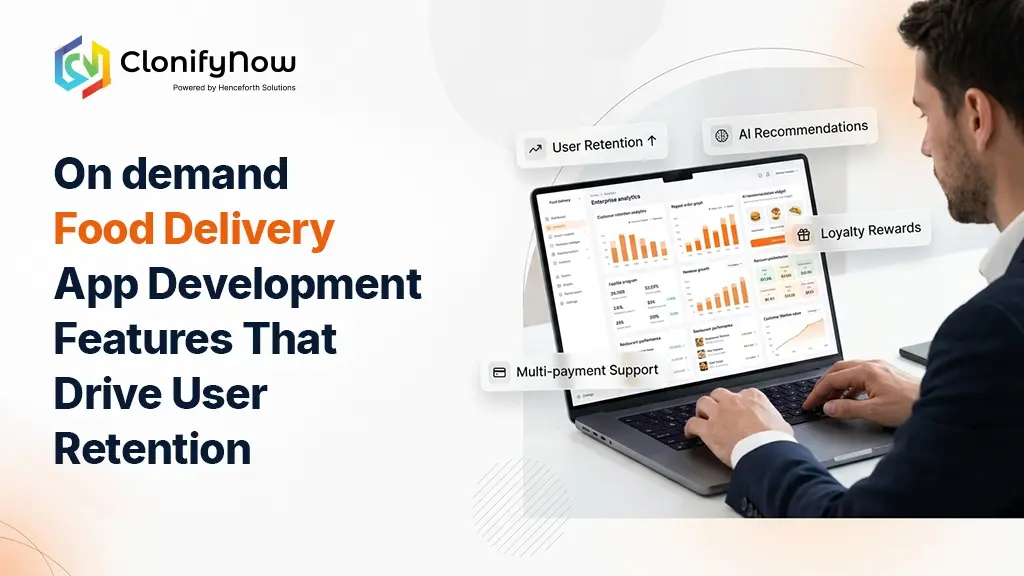
In an industry with virtually no switching costs, retention is the ultimate growth metric. With the help of sophisticated on demand food delivery app development strategies, you can ensure that your platform offers a consistent, high-quality user experience that customers will keep coming back to.
Advanced capabilities for modern applications
- Hyper-local search and predictive filtering
Consumers want instant results today. By connecting to geolocation APIs, your app can automatically show nearby restaurants that are open based on the user’s exact location, helping to reduce order abandonment.
- AI-driven recommendation engines
Machine learning algorithms can consider past ordering habits, time of day, and regional trends to offer personalized meal options to users, greatly increasing average order value (AOV).
- Multi-tier loyalty programs and gamification
With customer retention strategies for food delivery apps, build milestone-based reward systems, points per purchase, and referral programs to turn a casual user into a long-term brand advocate.
Investing in top-tier on demand food delivery app development features directly translates to higher engagement scores and an increased customer lifetime value. If you want to successfully roll out these advanced features without increasing your time to market, it’s often best to use pre-built frameworks. Take ClonifyNow for example, it provides strong proven bases for startups to launch high-end features instantly without having to invest in heavy engineering overhead initially.
Food ordering app development strategies for market penetration
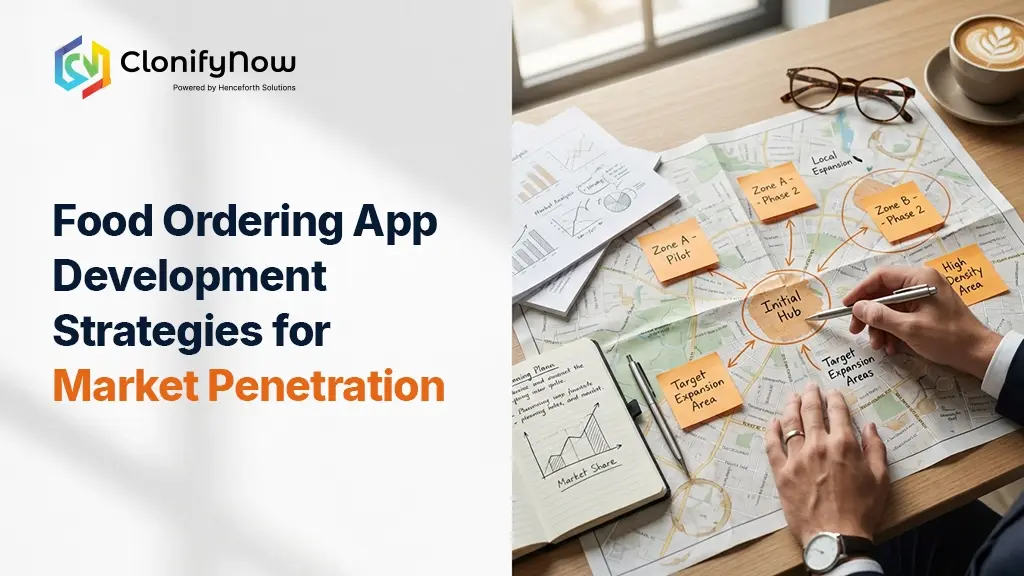
To get your platform successfully launched, you need to find the right balance between localized marketing and high-efficiency merchant onboarding. The effective food ordering app development reduces the operational friction to create an attractive environment for both restaurants and consumers.
Key steps to dominate your local market
- Hyper-focused geographic launches
Instead of launching across an entire country at once, put all your marketing resources into one city or high-density neighborhood. Own that niche, stabilize your logistics network, and leverage that proven playbook to move into the next territory.
- Seamless automated merchant onboarding
Build simple web-based menus and automated menu ingestion tools to reduce friction for new restaurant partners through restaurant partner acquisition strategies. Create clear documentation to get kitchens live and receiving orders in under 24 hours.
- Dynamic pricing and demand matching
Introduce automated surge pricing algorithms during peak hours, heavy rain, or driver shortages. This encourages more drivers to log on while balancing consumer demand and protecting your core delivery margins.
With the right food ordering app development blueprint and aggressive hyper-local marketing campaigns from ClonifyNow, you can quickly grab a piece of the market from the legacy players.
Build food delivery app frameworks with optimal cost structures
To build food delivery app, founders and stakeholders often compare the initial development costs with the scalability of the platform in the long run.
Custom development vs clone frameworks
A 100% custom build from scratch allows you full design freedom, but generally demands a big cash commitment up front and 6-12 months of active development time. On the other hand, building food delivery app systems on pre-built, white-label frameworks significantly reduces engineering delays, allowing startups to be up and operating quicker and earn income faster.
Development cost breakdown
The overall budget for launching a food delivery platform depends on its operational complexity, chosen tech stack, and geographic scope. Below is an overview of standard market investments compared to specialized engineering solutions:
- Basic MVP Structure: $3,000 – $6,000 (Core ordering functionality, basic tracking, single platform).
- Advanced Multi-Platform Ecosystem: $6,000 – $14,000+ (Real-time route optimization, automated payout infrastructure, dedicated cross-platform apps).
- Optimized Corporate Solutions: For a highly competitive, budget-conscious alternative, review the specialized pricing structures at ClonifyNow. The structured packages provide a powerful, production-ready foundation at a fraction of standard custom development costs, letting you reallocate capital toward driver acquisition and user marketing.
For more pricing details, refer to this page: https://clonifynow.com/pricing/
Continuous optimization for long-term growth
Launching your application is merely the beginning of a continuous business journey. Enterprise leaders must constantly evaluate key performance indicators (KPIs) such as customer acquisition cost (CAC), customer lifetime value (LTV), and logistical fulfillment rates to stay ahead in the competitive race.
With the appropriate user-centric food delivery app development processes, scalable technology, and powerful data-driven hyper-local marketing strategies, your firm may make a very profitable and sustainable impact in the burgeoning on-demand delivery industry.
FAQs About Food Delivery App Development
How much does food delivery app development cost for a startup?
The cost depends on features, platforms, and business model. Startups often begin with an MVP to validate demand before investing in advanced automation and scaling capabilities.
What features should founders prioritize in a food delivery app?
Founders should prioritize real-time order tracking, secure payments, restaurant management, delivery partner tools, customer notifications, and analytics to improve operational efficiency and user retention.
Should startups choose custom or white label food delivery app development?
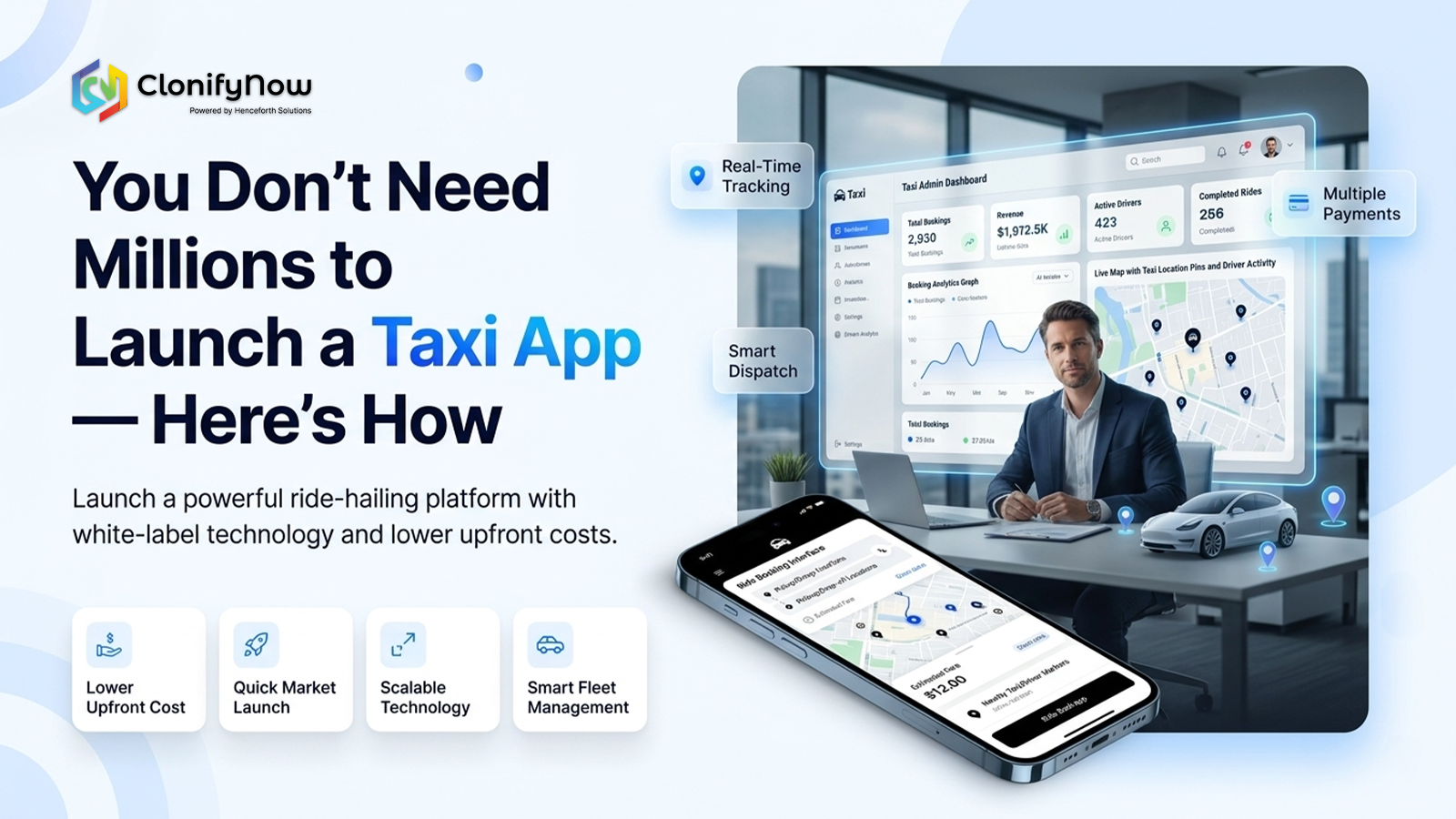
White label solutions enable faster market entry and lower upfront costs, while custom development offers greater flexibility for businesses planning unique features and long-term scalability.
How can businesses increase customer retention in a food delivery app?
Businesses can improve retention through personalized recommendations, loyalty programs, referral rewards, faster deliveries, seamless checkout, and consistent user experiences backed by data-driven insights.
What is the best business model for a food delivery startup?
The ideal model depends on your market. Founders commonly choose aggregator, single restaurant, cloud kitchen, or multi-restaurant platforms based on revenue goals and operational resources.


 +91-9464826889