





The carpooling industry is no longer a trend. This is a serious business model. Transportation companies, startups and enterprise teams are investing heavily in it. The demand for affordable shared travel options is increasing among commuters and fast-moving businesses are gaining real market share.
Did You Know? India became BlaBlaCar’s largest market globally in 2025, accounting for roughly one-third of the company’s worldwide carpooling activity. The platform expects nearly 20 million passengers in India alone in 2025, demonstrating the massive demand for shared mobility solutions.
If you are a startup founder, business owner, or an enterprise decision-maker exploring this space, one of the first questions that comes to your mind is the cost to develop a carpooling app. It depends on the scope of features you want to develop, choice of technology, the target market and the development team you hire.
At ClonifyNow we help carpooling startups and growing businesses bring carpooling platforms to market fast, lean and without wasteful overhead
How to Build an App Like BlaBlaCar and Why Businesses Are Doing It
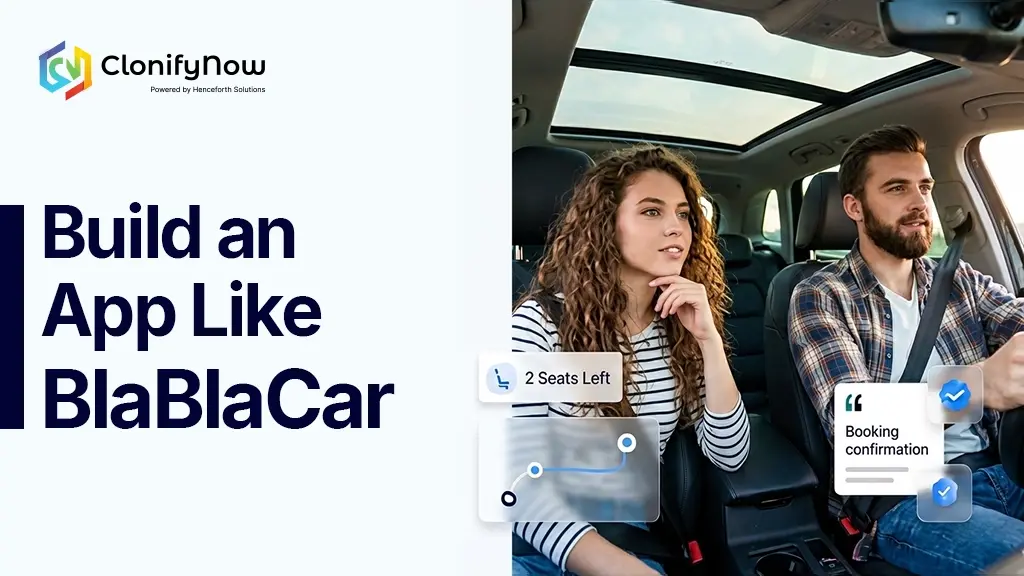
BlaBlaCar is a service that links drivers with empty seats to passengers who want to travel the same route. It is one of the most recognized peer-to-peer carpooling platforms in the world. If you are thinking about how to build an app like BlaBlaCar, you should first learn what makes that model work before customizing it to your business goals.
The Core Matching Model:
Your app needs to reliably pair the right driver with the right passenger. That core logic guides all the design and technical decisions you make.
- The driver posts a trip with route, date, available seats and price they are asking.
- Passengers can search and filter rides based on preferred timing and location.
- The platform handles booking confirmations and payment in the background.
- Both sides rate each other after trips to maintain trust on the platform.
Before you start to develop you need to define your business model.
Before you write a single line of code for your platform, define your revenue model. Typical monetization methods include:
- A service fee per booking, typically 10-20% of the ride value.
- Monthly subscriptions available for frequent riders or high-volume drivers.
- Corporate plans for companies that manage employee commutes at a large scale.
- This choice will define the entire scope of your feature and will directly impact your overall development budget.
What Makes Apps Like BlaBlaCar Stand Out in the Market
Today, there are few apps like BlaBlaCar, operating in global and regional markets. Waze Carpool, Scoop and Zimride are all aimed at different audiences. The ones that consistently grow and keep users have a clear set of product strengths.
Safety and Trust Features Are Non-Negotiable
Carpooling means you have strangers in your car. It’s really the product you’re selling. Every serious platform needs to have:
- Verification of government-issued ID during driver onboarding.
- All user accounts should have OTP based phone number confirmation.
- Before booking you can read detailed reviews and give two-way ratings.
- In-app messaging to keep personal contact info private all the way through.
- A SOS or emergency alert button that can be used during active trips.
Smart Route Matching That Actually Works
Mostly the BlaBlaCar clone is not failing because of bad design, but because their matching logic is too rigid. The successful platforms are:
- Real-time GPS tracking of passengers and drivers during a trip.
- Flexible pick-up and drop-off within a specified corridor along the route.
- Smart search filters by time, seat count, price range and personal preferences.
A Booking Flow That Stays Out of the Way
Complexity kills conversions. The top carpooling services take a user from a route search to a confirmed booking in under three minutes. People delete apps, and people keep apps, and what separates the apps people keep from the apps people delete are small screens, clear calls to action, and instant booking confirmation.
Learn How to Build a Scalable Ride-Sharing App Before Writing Any Code

Launching an app, and keeping it fast and cheap at scale are two very different problems. If you take the time to learn how to build a scalable ride-sharing app from scratch, you avoid the expensive architectural rewrites that sink most growing platforms.
Choose a Technology Stack Built for Growth
The tech choices you make at launch determine how expensive scaling gets down the road. Businesses investing in app development services should prioritize scalable technologies from day one.
- React Native or Flutter for cross-platform iOS and Android from a single codebase.
- Backend API processing and core business logic with Node.js / Python.
- PostgreSQL for structured data, Redis for real-time session caching.
- Route rendering, navigation, geolocation: Google Maps API or Mapbox.
- AWS or Google Cloud for infrastructure that scales up and down with traffic demand.
Architecture and Integration Strategy
In a micro-services architecture, your booking engine, payment processor, notifications, and matching system can scale independently. One failing won’t take the others down. When you combine this with an API-first build approach and enterprise integrations, corporate HR tools and third-party travel platforms become simple plug-and-play connections, not expensive engineering projects down the road.
What Your Budget Actually Needs to Cover
This is what every decision-maker needs before he approves a development budget. How much does it cost to develop a carpooling app. To develop a carpooling app the price depends on the features, location of the development team, and if you are building it from scratch or from a proven base.
Development Cost by Stage
- Product Discovery and Scoping
Requirement gathering, technical architecture planning, and wireframing for all user types. Estimated range: $3,000 to $8,000.
- UI and UX Design
Full visual design for the passenger app, driver app, and admin dashboard. Estimated range: $5,000 to $15,000.
- MVP Development
Core features: user registration, route posting, ride search, booking, payments, and ratings. Estimated range: $15,000 to $18,000 covering both iOS and Android platforms.
- Advanced Feature Development
Real-time GPS tracking, intelligent matching, dynamic pricing, and reporting dashboards. Estimated range: $10,000 to $18,000 as an added layer on top of the MVP.
- QA Testing and Deployment
Performance testing, security audits, app store submissions, and server configuration. Estimated range: $8,000 to $20,000.
What Pushes the Budget Higher
- A simultaneous launch on both iOS and Android is much more expensive than a phased launch starting with a single platform.
- In the US or Western Europe, developers charge $100-$200 per hour whereas equally skilled teams in South Asia charge $25-$60 per hour.
- Any third party service such as payment gateways, SMS providers, map APIs will increase the build time and the monthly running costs.
- Features outside the normal carpooling workflow always add to timelines and final cost.
At ClonifyNow, we believe in transparent pricing based on milestones so that clients know exactly what they are paying for at each stage of the project.
How to Build an App Like BlaBlaCar Without Overspending on Version One
Most first-time founders build everything before validating anything. The way to do this right, is to start with the minimum necessary to prove that there is market demand, and then build on that with actual feedback from users.
Launch With a Minimum Viable Product (MVP)
Demand should be the first priority, not catering for every edge case. A lean MVP might include:
- Driver and passenger sign-up with profile creation and basic verification.
- Drivers route posting and passengers ride search with filters.
- In-app booking and payment processing Handling trip cancellations.
- Trip ratings and reviews of both sides of the marketplace.
- Then ship it and get real data, and only build the features your users ask for.
White-Label Solutions Can Reduce Time and Cost Significantly
White-label carpooling platform saves businesses that require speed from the build from scratch. You get a tested codebase that you customize with your branding, pricing logic and feature priorities. This approach can reduce time-to-market and total build cost by 40 to 60 percent, compared to a fully custom development cycle.
Learn How to Build a Scalable Ride Sharing App With the Right Development Team
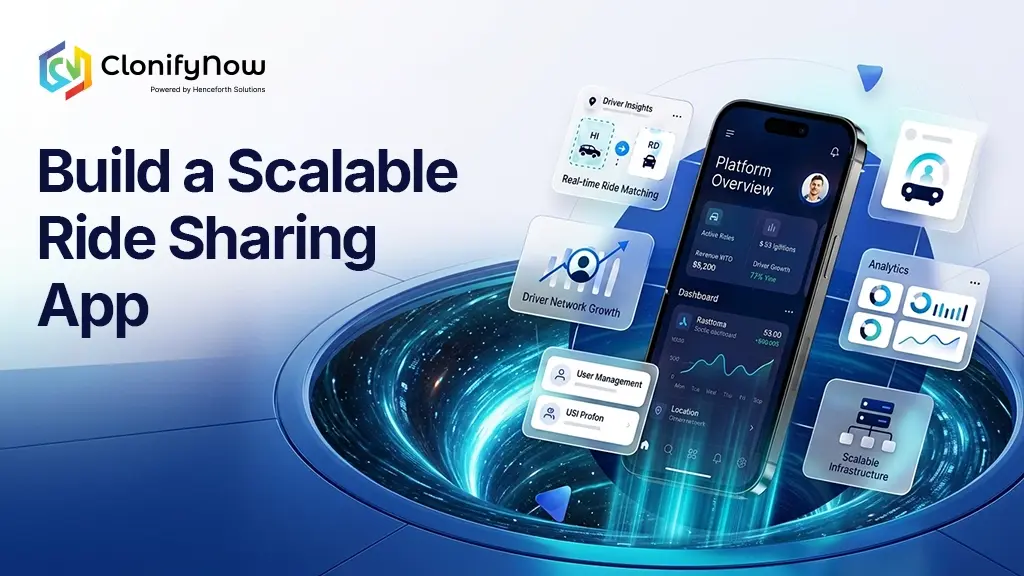
The team you choose is as important to the outcome as the architecture you design. Technical strategy will only take you so far, execution is everything in the end.
What to look for in a partner in development
- Demonstrated success with two-sided marketplace or on-demand transportation apps.
- Hands-on experience with real-time data systems and features that rely heavily on geolocation.
- Agile process with regular sprint reviews and clear communication to the client.
- QA engineers work side by side with developers from the very beginning.
- Reliable post-launch support and continuous roadmap consultancy.
Building In-House vs Outsourcing
Having our own team gives us full control but requires long term commitments to staff and a significant overhead. A fully tested and experienced development team from an external agency, at a fraction of the cost and faster delivery, with its involvement scalable up and down as per your real-time project needs.
Ready to Build Your Carpooling App?
The cost to develop a carpooling app is a real investment, but it is an investment with a clear return potential in a space where demand continues to grow. Have a clear business model, build lean with the right architecture and work with partners who have been there before.
ClonifyNow brings transportation companies and startup founders quickly up and running on carpooling platforms that are fast, scalable and built to grow from day one. Get in touch with us today and let’s turn your idea from concept to a live revenue-generating product!
FAQs About The Cost To Develop a Carpooling App
How much does it cost to develop a carpooling app from scratch?
The cost to build a carpooling app varies between $10,000 and $20,000 depending on features, platform choice and your development team’s location.
How long does it take to build a carpooling application?
On average it takes 3-5 months to build a basic MVP. Building a full-featured carpooling platform with advanced matching and analytics takes 8 to 12 months.
What are the key features of a carpooling app?
All carpooling apps must include user verification, live GPS tracking, in-app payment, ride matching, two-way rating, and an emergency SOS button for passenger safety.
Will a carpooling app business be profitable in 2026?
Yes. Carpooling apps make money through booking commissions, subscriptions, and corporate plans. It is a very lucrative business model due to the increasing demand for affordable shared mobility.
Can I build a carpooling app without starting from scratch?
Yes, totally. A white-label or clone-based carpooling solution will get you to market faster and reduce your dev costs by up to 60 percent versus fully custom builds.



 +91-9464826889