





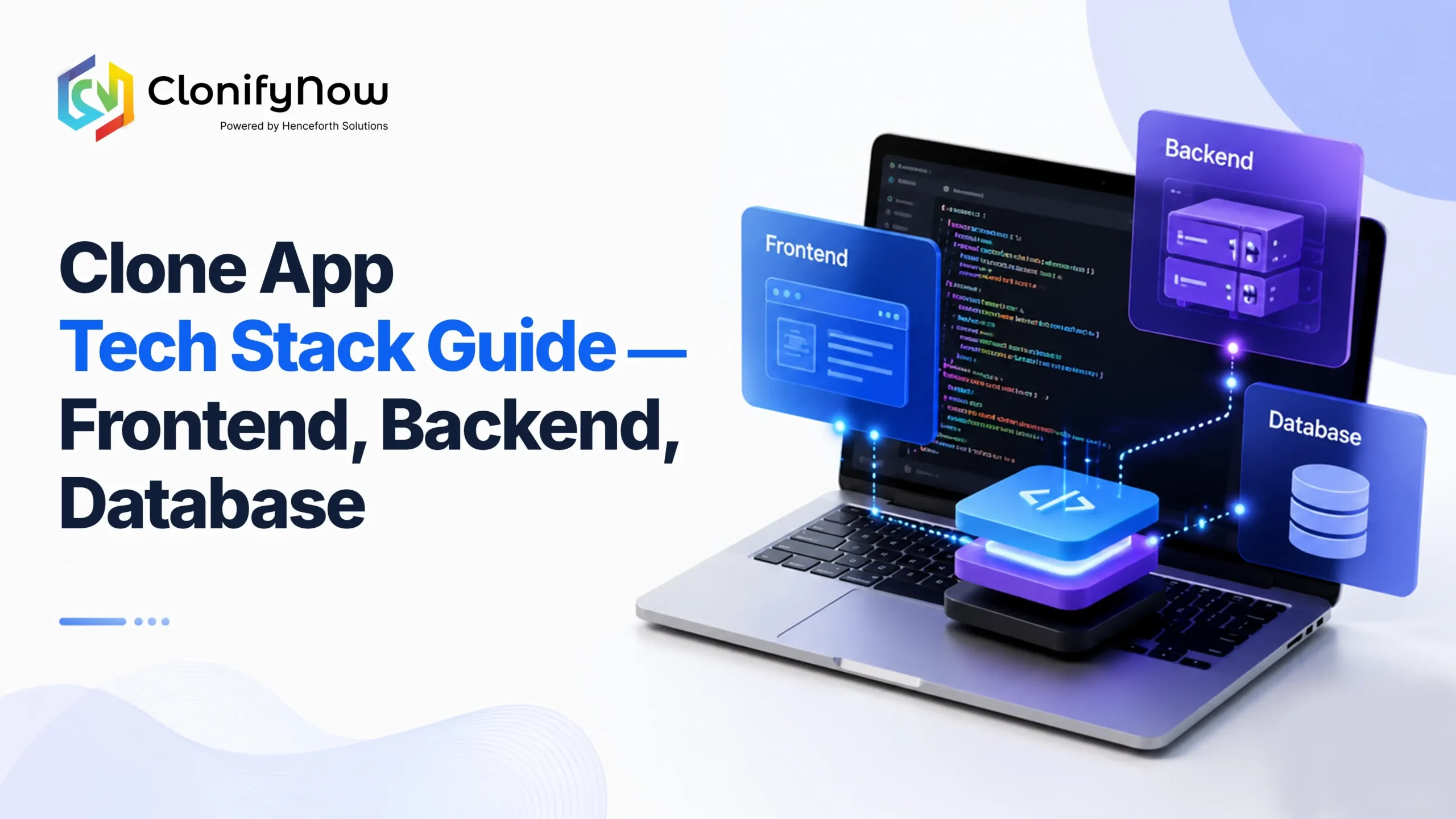
You need a strong foundation to build a successful digital product. If you are building your own platform on top of existing market leaders, the technical decisions you make will have direct implications on the speed, scalability, and eventual business viability of your platform. Choosing the right clone app tech stack will ensure your platform will be able to scale with the rapid growth of users and will remain cost-effective to maintain.
Did you know? More than 15.6 million developers worldwide now use cloud-native technologies, and 77% of backend developers have adopted at least one cloud-native technology. This highlights why scalable frontend, backend, and database architectures have become the standard foundation for modern clone apps and enterprise platforms.
At Clonifynow, we help businesses build scalable platforms ready for the market. In this definitive guide, we’re going to explore the different components you need to build a high-performing digital product from scratch.
Best Tech Stack for Clone App Success
Choosing the best tech stack for clone app development is a balancing act between the speed of current development and future scalability. As your user base grows, you need an architecture that can be deployed quickly while remaining secure and performant.
Core Components of a Modern Architecture
The entire application architecture is based on three basic pillars:
- Frontend: The client-side experience and user interface.
- The Backend: The server-side logic, business rules, and API integrations.
- The Database: The data storage layer that manages user profiles, transactions, and system states.
Factors Defining the Best Tech Stack for Clone App Scalability
Enterprise decision-makers and founders of startups should consider three key metrics when evaluating technologies:
- Time to Market (TTM): How fast can your team write, test, and ship features?
- Maintainability: Is the code base easy to maintain/update, or will it need a complete rewrite in 2 years?
- Community and Ecosystem: Is there enough pool of skilled developers available in the market to support this technology?
By using a proven clone app tech stack, you can avoid technical debt and ensure that your platform is stable from day one.
Selecting the Right Clone App Frontend Backend Architecture
The communication of your client-side interface with your server-side logic is what determines a seamless user experience. A robust clone app frontend backend connection is essential for real-time data synchronization, rapid page loads, and secure user sessions.
Frontend Frameworks for Web Platforms
Your development team needs a framework that provides fast rendering and efficient state management in the web interface:
- React.js: React is a tool by Meta. It has a component-based architecture that allows developers to reuse UI components, thus significantly reducing development time.
- Vue.js: A progressive framework with a low learning curve and great performance, making it a fantastic option for startups needing rapid prototyping.
Backend Environments for High Concurrency
The backend does all the heavy lifting, from processing payments to handling user authentication. The perfect clone app frontend backend setup is asynchronous, non-blocking environments that can handle multiple user requests at the same time:
- Node.js (JavaScript/TypeScript): Let developers use a single programming language for the frontend and backend, providing a unified codebase and easier team management.
- Python (Django/FastAPI): Best for heavy data processing, machine learning integration, or quick MVP development applications, thanks to built-in admin panels and security features.
- Go (Golang): Enterprise platforms chose it for its amazing execution speed and small memory footprint under heavy concurrent traffic.
API Layer and Data Communication
For seamless connection of your clone app frontend backend, you need an efficient API design:
- REST APIs: De facto standard for standard CRUD (Create, Read, Update, Delete) operations for their simplicity and wide support.
- GraphQL: Great for complex platforms where the frontend needs a very specific, nested dataset in a single round-trip, saving network overhead.
Why Choose a React Native Clone App Strategy
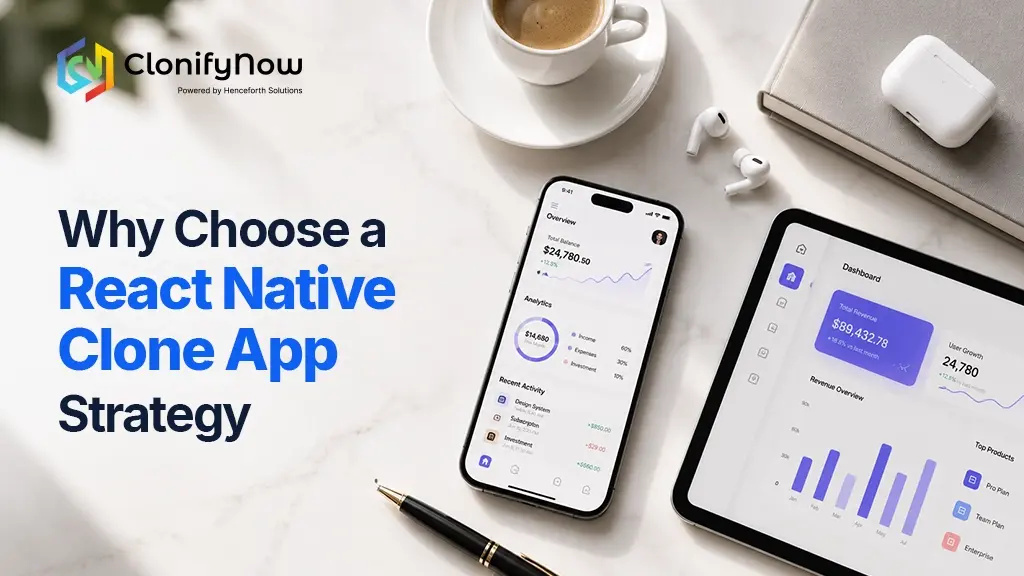
If you’re developing for mobile-first platforms, separate native apps for iOS and Android can double your costs and launch timelines. You can build a react native clone app to keep a single cross-platform code base while still providing a native look and feel.
Financial and Operational Advantages
Going with a react native clone app framework comes with strategic advantages for startup founders and marketing leaders:
- Shared Codebase: Write your core logic once and deploy it on both iOS and Android platforms. This brings down your initial development costs by up to 40%
- Speedier Feature Releases: One team can push updates to both app stores simultaneously, instead of coordinating two separate dev teams.
- Hot Reloading: Developers can view code changes immediately without rebuilding the whole app, speeding up debugging and UI tuning.
Performance and User Experience Excellence
Many stakeholders are concerned that cross-platform frameworks compromise on speed. But a well-optimized react native clone app connects JavaScript components to native UI widgets directly, thus enabling smooth 60fps animations, responsive touch handling, and full access to device hardware like GPS, biometrics, and camera modules.
The app development services are often suggested at Clonifynow as it maximises your capital efficiency whilst still providing a quality product.
Database Architecture for High Volume Platforms
A premier clone app tech stack is only as good as its database design. Your data layer must scale to thousands of reads and writes per second without adding system latency.
Relational Databases for Structured Data
Relational Database Management Systems (RDBMS) are essential for applications requiring data integrity and transactional consistency:
- PostgreSQL: The world’s most advanced open source object-relational database. It provides advanced indexing, native JSON support, and strict ACID properties, making it the first choice for financial transactions and core user data.
- MySQL: A very popular and reliable relational database management system known for its ease of use, strong replication features, and large community.
Non-Relational Databases for Dynamic Content
NoSQL databases are great at dealing with unstructured or semi-structured data that changes a lot:
- MongoDB: A document database that stores data in flexible, JSON-like documents. It is ideal for real-time messaging feeds, user profiles, and product catalogs with variable attributes.
- Redis: An in-memory data structure store that is mostly used as a caching layer or session broker to reduce the load on the database and provide sub-millisecond response times to users.
Infrastructure Security and DevOps Best Practices
For implementing your clone app frontend backend infrastructure, it’s essential to have a secure and automated cloud infrastructure that offers high availability and data protection.
Cloud Hosting and Containerization
- AWS & Google Cloud Platform (GCP): Offer robust, scalable cloud infrastructure with managed services for databases, load balancing, and content delivery.
- Docker & Kubernetes: Containerize your apps to run identically across dev, staging, and production, and use orchestration tools to scale automatically on live traffic spikes.
Security Protocols and Compliance
- Data Encryption: Use TLS/SSL to encrypt all data in transit between the client and server. Use AES-256 to encrypt sensitive data at rest.
- Authentication Frameworks: Use OAuth 2.0 and JSON Web Tokens (JWT) to manage user sessions securely and authorize API access permissions safely.
Making Your Final Technical Decision
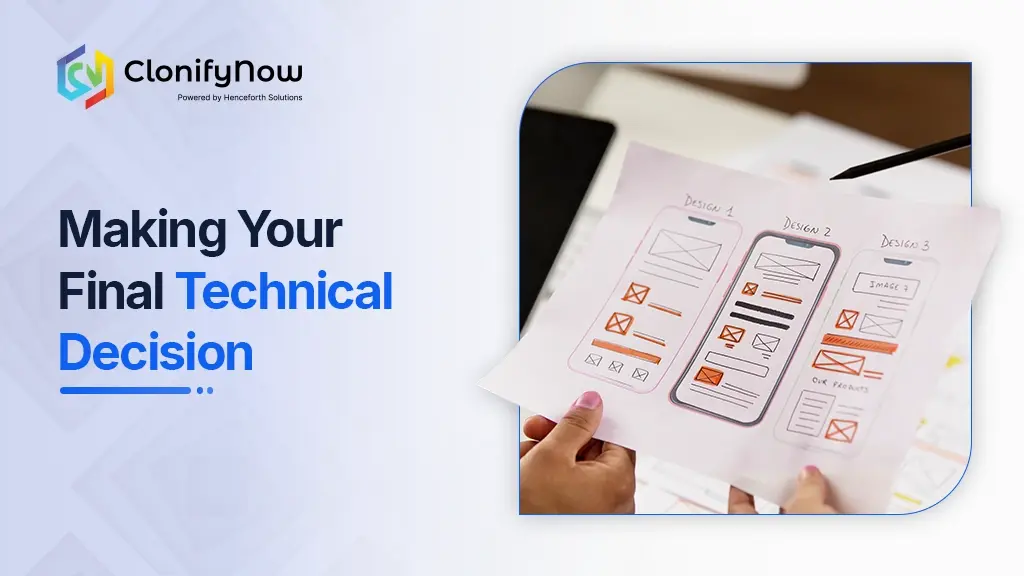
It depends on your goals, budget, and expected growth, on how best the frontend, backend, and database should look for your business.
Teaming up with a seasoned development team can help you take the guesswork out of platform building. At Clonifynow, we build custom, high-performance applications specific to your industry requirements. Get in touch today and let us help you design the ideal technical architecture for your next digital project.
FAQs
Which is the best tech stack for clone app development?
The best clone app tech stack usually comprises React/React Native, Node.js, PostgreSQL, and cloud infrastructure to build scalable, secure, and high-performance apps for growing businesses.
How to choose the right frontend and backend for a clone app?
Scalable pick technologies can be developed quickly, are secure, have a readily available pool of developer talent, and will be easy to maintain in the future. React with Node.js is still a popular choice for modern clone app development projects.
Best database for scalable clone app development?
PostgreSQL is great for structured transactions, and MongoDB is great for flexible data models. Many businesses use a combination of relational and NoSQL databases to achieve better performance and scalability.
Is React Native good for building clone apps?
Yes. React Native quickens cross-platform development, cuts development costs, simplifies maintenance, and provides near-native performance to startups launching iOS and Android apps at the same time.
How do you build a scalable clone app architecture?
To achieve long-term scalability, reliability, and faster feature deployment, businesses should use cloud infrastructure, containerization, API-first architecture, secure authentication, caching, and automated DevOps pipelines.



 +91-9464826889