





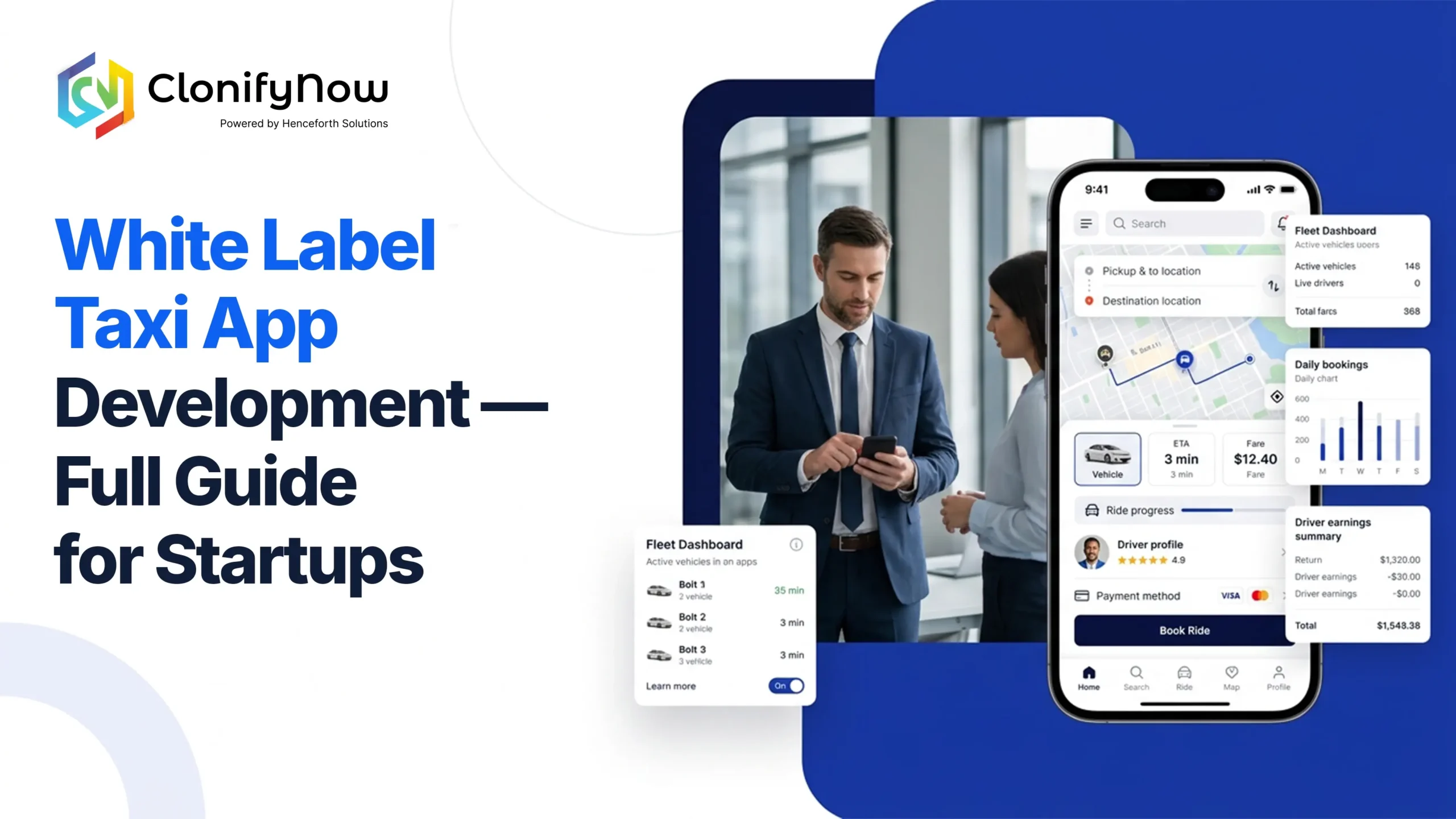
The ride-hailing industry has evolved beyond Uber and Lyft. Localized on-demand transport services are being rolled out by regional startups, corporate fleets, and traditional taxi companies, which are capturing large market shares. For a company founder or organizational decision maker trying to break into this market, building an app from scratch can be a major drain on time and capital. This is where white label taxi app development makes sense.
Did you know? The global ride-hailing services market is projected to reach USD 181.5 billion by 2033, growing at a 18.6% CAGR. This rapid growth is driven by increasing smartphone adoption, urbanization, and demand for convenient on-demand transportation creating major opportunities for startups and mobility businesses.
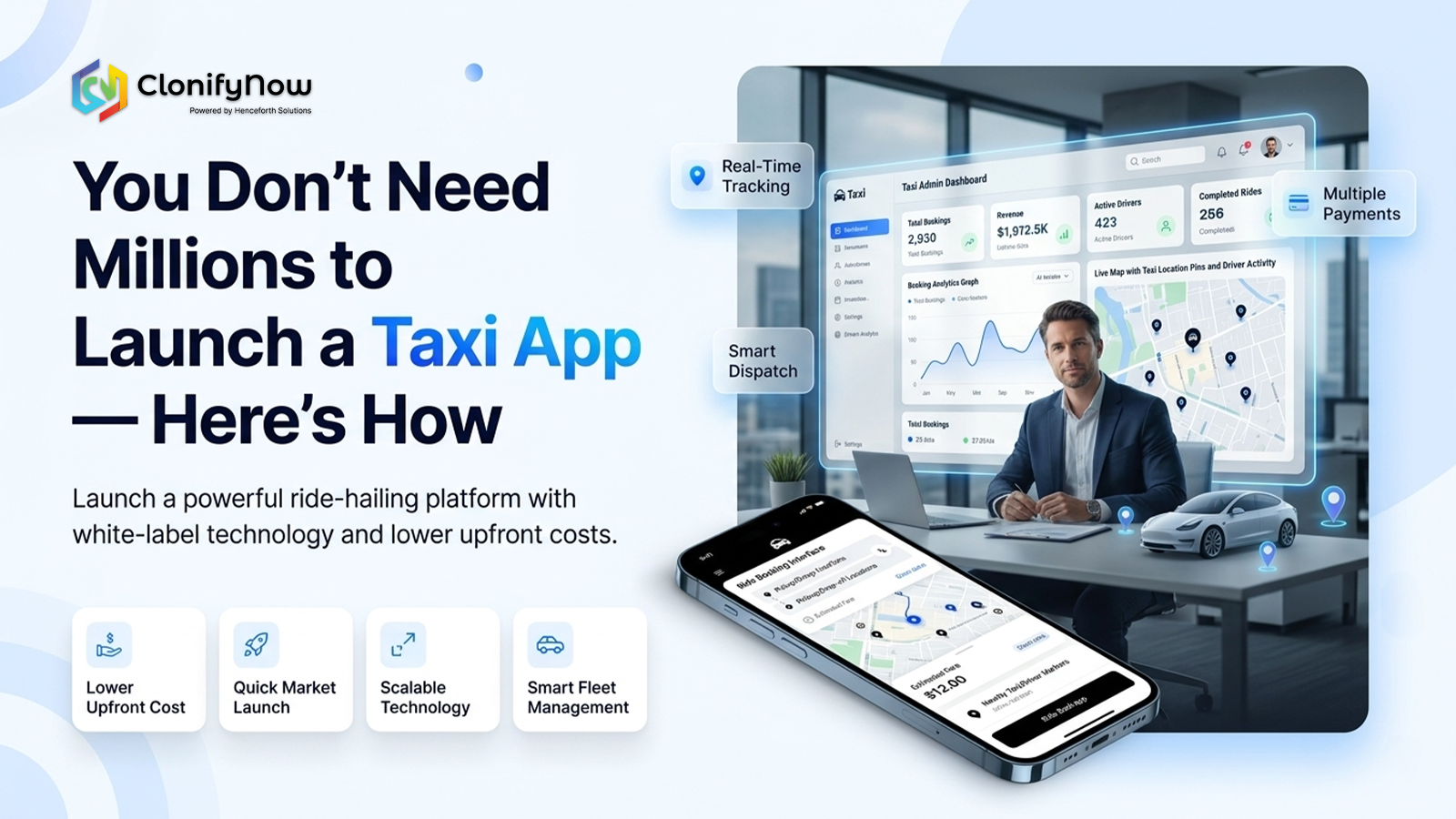
White label taxi app development enables you to provide a completely branded, market-ready platform in a fraction of the time. Business owners may leverage pre-built and tested core architectures and focus their attention on local marketing, driver onboarding, and operational excellence vs. fighting complex software bugs.
Partner with a proven team like ClonifyNow to get a powerful, scalable system built for your unique brand identity swiftly and reliably. This in-depth tutorial will cover the features, benefits, how it works, and measures to follow to launch a thriving ride-hailing business.
Why Choose a White Label Taxi App Development Company
Choosing the right technology partner is the most important decision you will make when launching a ride-hailing startup. By teaming up with a dependable white label taxi app development company, you get immediate access to production-ready frameworks that have been tested and optimized for real-world stress.
You don’t re-invent the wheel; you inherit an ecosystem founded on industry best practices. This approach avoids the usual trial-and-error phase that hampers the development of custom software, protecting your initial capital investment and providing you with a predictable path to launch.
Rapid Time to Market
In general, building a ride-hailing platform from scratch takes around six months to a year. A dedicated white label taxi app development company can deploy your branded apps in a matter of weeks. This speed lets you exploit gaps in the market before your competitors can.
Proven Architecture and Low Bugs
A white label taxi app development company that you can count on has ready-made solutions that are implemented in real-world scenarios. They have coped with thousands of concurrent users, complex location data spikes, and thousands of transactions. So you skip the unstable beta-testing phase and ship a reliable product from day one.
Focus on Core Business Operations
If you’re a startup founder or marketing leader, your time is better spent on driver acquisition, customer retention strategies and building local partnerships. Let a specialized white label taxi app development company do the technical heavy lifting and concentrate on growth rather than managing software developers.
Understanding White Label Taxi App Development Cost
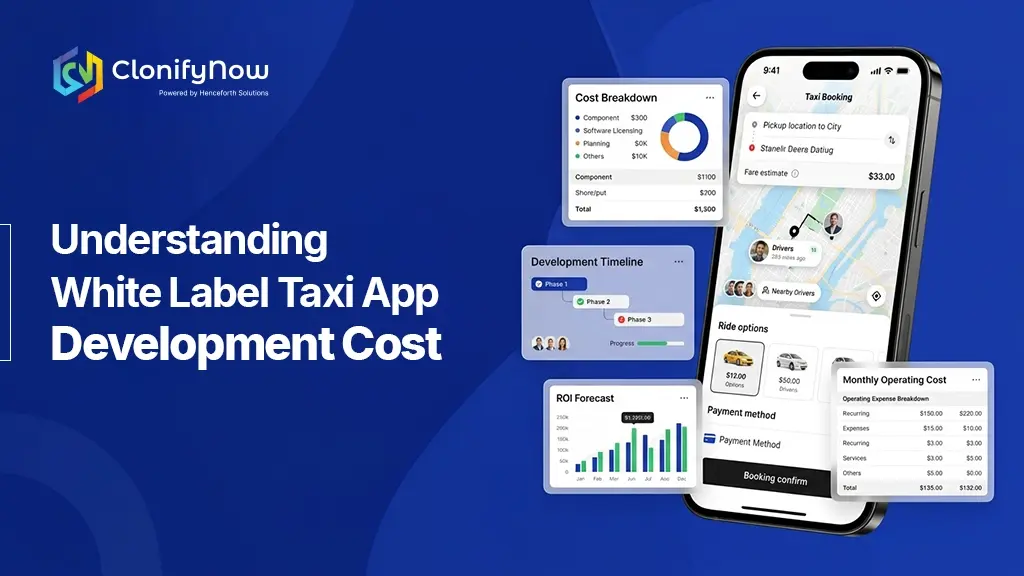
Budget allocation is one of the main difficulties for any startup. The white label taxi app development cost is significantly lower than custom development, which makes it a very tempting option for lean firms and enterprise innovators. But how white label costs compare to custom development gives a predictable, transparent investment structure, while custom apps may easily go into six figures.
However, it is vital to understand that the ultimate cost of designing a white label taxi app is determined by a few basic criteria. If you know these things, you may manage your budget correctly and avoid getting into hidden costs later on.
Core Cost Driver
- Platform Selection: Of course, if you are developing your white label taxi app for both the iOS and Android platforms, it will add to the white label taxi app development cost as compared to developing for a single platform. But we highly urge you to go for both platforms for maximum market coverage.
- Customization Level: Very economical for basic branding (logos and color schemes). The extensive UI/UX adjustments or installation of unique features will impact the cost structure of white label taxi app development.
- Geographic Scale: The overall required investment might be impacted by the addition of multi-currency capabilities, regional payment gateways, and localized language packs.
Long-Term Financial Planning
- Updates and Maintenance: Operating systems are upgraded yearly, and mapping APIs change. You’ll also have to account for regular technical assistance to keep your apps working successfully.
- Server Infrastructure: High-availability cloud hosting scales with your ride volume, so your hosting costs will scale right along with your revenue.
- Third Party API Fees: Features like SMS verification gateways and premium mapping services are often on a pay-as-you-go or tiered subscription model.
Choosing the Right White Label Taxi App Development Services
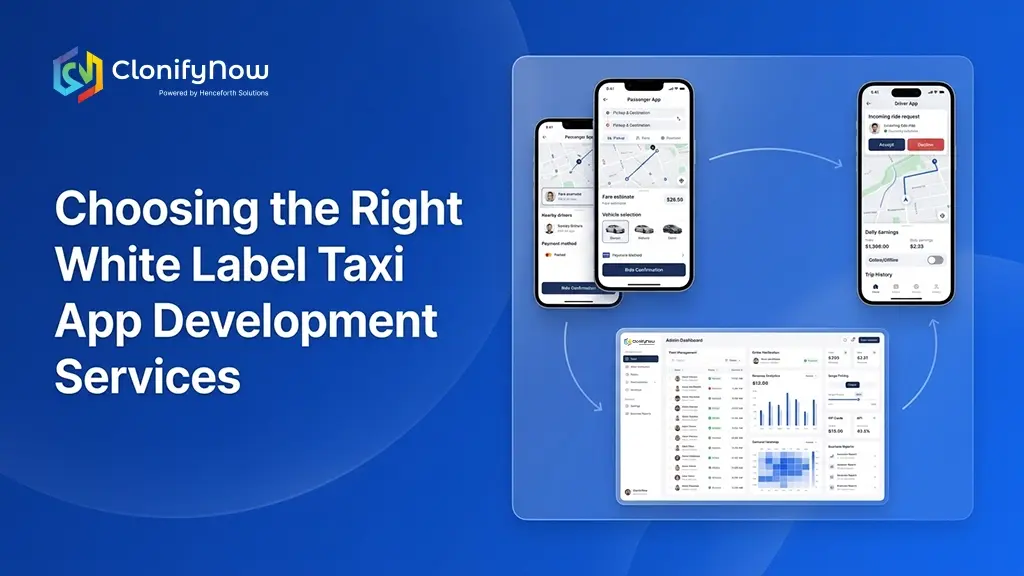
All platforms are not created equal. You need end-to-end white label taxi app development services across the digital ecosystem to stay ahead of the competition. A complete ride-hailing solution is composed of three separate but connected modules working together seamlessly in real time: the Passenger App, the Driver App, and the Admin Dashboard.
While going through the service providers, check if their core white label taxi app development services include deep customization, scalable cloud architecture, and robust security protocols to protect users’ data. Companies like ClonifyNow offer end-to-end solutions that bring together these critical components into one high-performing platform.
Crucial Passenger App Features
- Hassle-Free Onboarding and Profile Management
Passengers can sign up in seconds using their phone number, email address, or social media profile. Premium white label taxi app development services focus on the simplest login process to reduce user drop-off rates.
- Real Time Tracking & Fare Estimator
A real-time interactive map of available drivers is a must-have. Users also need to get a reliable estimate of the fare before booking a ride to ensure transparency and build long-term trust.
- Secure Payment Gateways
Your app should allow users to pay by credit/debit cards, mobile wallets, digital banking, and cash. Providing a choice of payment methods reduces friction at the end of the journey.
Essential Driver App Features
- Navigation and Journey Planning
Drivers require a clean interface to accept or reject incoming ride requests easily. They take the most efficient routes thanks to integrated GPS navigation with real-time traffic updates.
- Earnings Dashboard & Analytics
Drivers are incentivised with a clear breakdown of daily, weekly, and monthly earnings. Showing their bonuses, tips, completed trips helps to retain talent on your platform.
- Driver Availability Switch
Drivers need to be in charge of their own schedule. They can flick a simple “Online/Offline” switch to decide exactly when they want to receive ride dispatches.
Powerful Admin Dashboard Capabilities
- Fleet & Driver Management
View driver documentation, approve background checks, monitor active vehicles and maintain fleet compliance—all through a single interface, using the central admin portal.
- Dynamic Pricing and Surge Pricing Tools
To optimize your profitability, you should be able to apply surge pricing for high-demand occasions, severe weather, or during rush hour in certain geographic zones.
- Advanced Business Intelligence
Robust data on trip volumes, cancellation rates, user retention, and peak hours provides enterprise decision makers the knowledge they need to optimize marketing spend and essential taxi app features guide.
Strategic Steps to Launch Your Taxi App
To win in the ride-hailing market, amazing software is not enough; a methodical execution plan is necessary. Once you have selected your white label taxi app development platform, you will have to manage local regulations, attract excellent drivers, and execute a hyper-targeted launch strategy.
Step 1: Legal Issues and Market Research
Before you write a piece of code or launch your marketing efforts, look at your local competition and see if there are any sectors that are underserved, such as corporate travel, eco-friendly fleets, or luxury trips. At the same time, get all the regional taxi permits, commercial insurance, and data privacy compliance certificates that the local authorities require.
Step 2: Customise and localise
Work together with your development team to embed your brand voice, color palettes, logos, and specific design guidelines within the white label framework. Ensure complete integration and rigorous testing of all local currencies, primary languages, and preferred regional payment networks.
Step 3: Driver Acquisition & Onboarding
You can’t have a ride-hailing app without good drivers. Start recruiting campaigns early with attractive commission plans, sign-on bonuses, or flexible weekly payouts. Maintain a high level of service safety through complete background checks and face-to-face training sessions.
Step 4: Marketing and Hyperlocal Growth
Run targeted digital marketing efforts in certain high-traffic locations such as airports, entertainment areas, or colleges. Take use of promo codes, first ride discounts, and referral programs to incentivise both riders and drivers to download the platform and create initial liquidity.
Future Proofing Your Ride-Hailing Business

The on-demand transportation industry is constantly changing, driven by evolving consumer expectations and technological advances. To remain competitive in the long run, startups and enterprise brands must think beyond basic point-to-point transport and consider sustainable, scalable feature sets.
Integration of Multi-Modal Transport Facilities
Today’s consumer wants flexibility. What does future-proofing your platform mean? It’s about preparing to add different types of mobility options into your ecosystem. This could mean standard sedans, luxury vehicles, electric bikes, scooters, or even integration with local public transit schedules, turning your app into a one-stop shop for urban mobility.
Using Artificial Intelligence for Optimization
Artificial intelligence can improve operational efficiency dramatically. Complex machine learning algorithms can analyze historical trip data and forecast demand spikes before they happen. This enables your system to ” pre-position ” drivers where there is high demand, reducing passenger wait times and increasing driver utilization rates.
Commitment to Sustainable Transport
As global regulators and consumers turn their attention to environmental responsibility, eco-friendly options can be a powerful brand differentiator. Having a separate option for hybrid or full electric cars caters to the eco-minded passengers and allows corporations to meet their green goals.
Conclusion
The white label taxi app development is the fastest and cheapest way for new startups and established businesses to grab market share in the on-demand transportation industry. Technical complexities and the massive upfront cost of custom software engineering are removed, allowing business owners to focus on localized execution, driver satisfaction, and customer retention.
The key to success is choosing a flexible and stable platform that can grow with your growing customer base. Partner with a dedicated expert like ClonifyNow and launch your business with a premium, secure, and fully branded application ecosystem designed to dominate your local market from day one. Realize your entrepreneurial vision into a thriving operational reality. Take the smart route to digital deployment.
FAQs About White Label Taxi App Development
Is it better to develop a white label taxi app or build a custom taxi app?
Yes. Faster deployment, less cost, proven features, and faster go-to-market, white label taxi app development is great for startups and businesses with limited development resources.
How much does it cost to develop a white-label taxi app for startups?
Cost depends on customizations, supported platforms, integrations, and features. It offers enterprise-ready features at a fraction of the cost of custom development for growing companies.
What should founders look for in a white label taxi app?
Founders should pay attention to real-time tracking, secure payments, driver management, admin dashboards, analytics, multi-language support, and scalable architecture to ensure long-term business growth.
Can a white-label taxi app be customized to different business models?
Yes. Businesses can customize branding, pricing, payment gateways, ride types, languages, and regional features to suit the local market and specific business needs.
Why Do Startups Prefer White Label Taxi App Development Companies?
Startups prefer white label taxi app development companies to reduce the development time, minimize technical risks, fast-track the product launch, and focus on customer acquisition instead of software engineering.



 +91-9464826889