





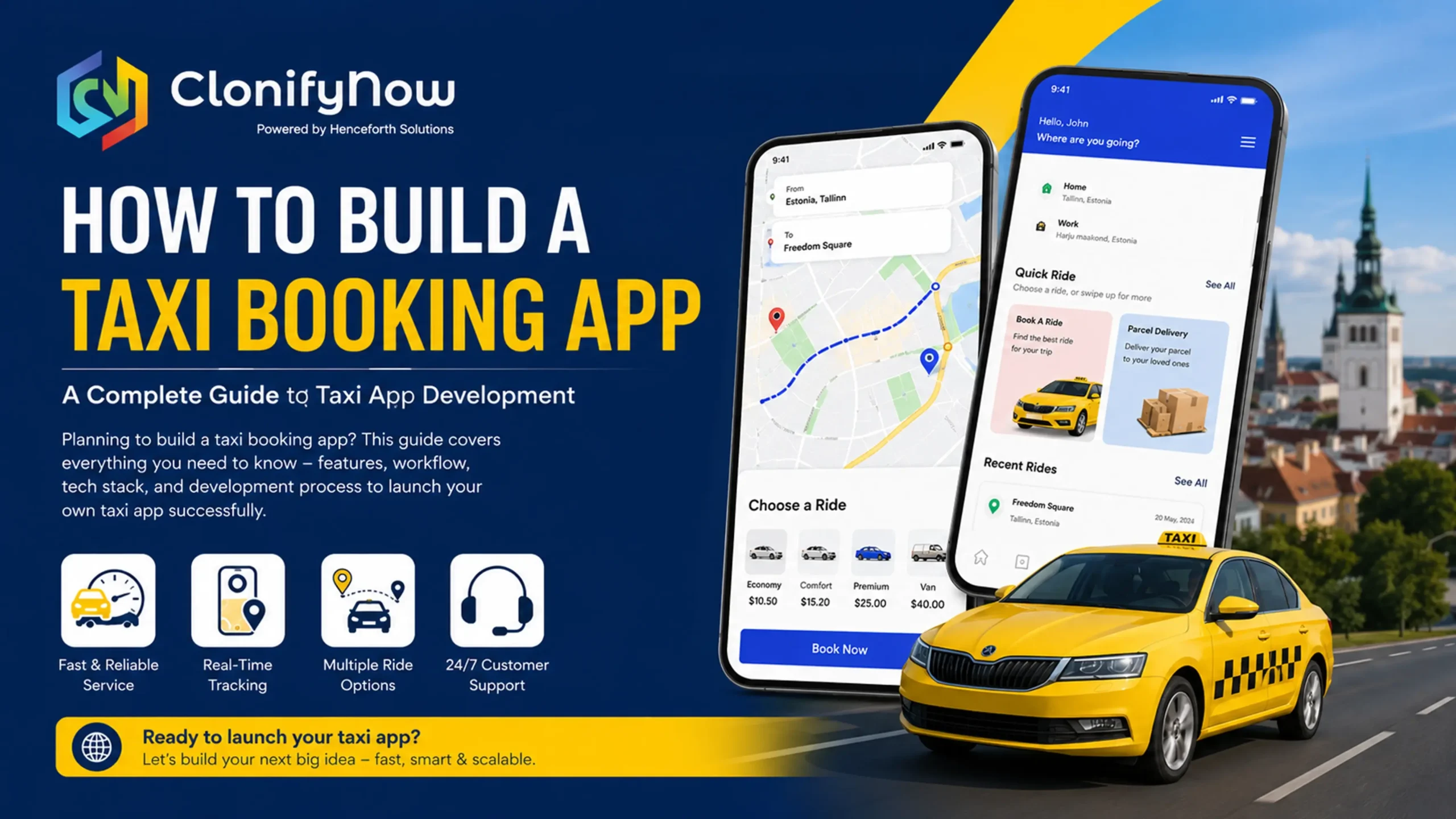
Have you remembered the last time you booked a cab? Recall your memory. You didn’t wave a hand. You opened an app, typed a destination, and a driver showed up at your door within minutes. Knowing how to build a taxi app is all about that powerful, yet seamless, experience. Booking a cab has truly become an effortless experience for users. If you are interested in creating a taxi booking platform or taking your existing taxi service online, then now is the perfect time to do so. This guide explains everything you need to know about what a taxi app is, how it works, what goes into it, what it requires, and how to develop a booking app in a short period of time and without spending a lot.
Why Is the Taxi Market a Big Opportunity Right Now?
The taxi apps and ride-hailing businesses are not going to collapse anytime soon. According to Statista’s report, “Ride-Sharing Market,” taxi apps made $59.6 billion in revenue in 2024, and the ride-hailing market as a whole is predicted to grow by $216 billion by 2028. People love the convenience, and that’s why taxi apps are thriving. Information and services have never been so easy and quickly accessible. Along with the urban population boom, younger app users tend to use mobile taxi applications as opposed to hailing or calling services. Now is the opportune time to create and launch an innovative, competitive taxi booking application.
What Is a Taxi Booking App and How Does It Work?
A taxi booking app is a mobile platform that connects passengers with taxi drivers in real-time. The user specifies the starting point. The app identifies the closest driver, provides a cost, and guides the user throughout the entire journey. Cab booking development is a convenient way for users to book a taxi and for taxi drivers to find a customer near them who needs a ride. These platforms rely on GPS and online payments to pair riders with drivers.
Here is a step-by-step overview of how simple this process is
- The user finds and opens the app and enters the locations of the desired pickup and drop-off of the ride.
- The app shows users available drivers, the estimated cost for the ride, and an approximate time for arrival.
- The available taxi driver accepts the user’s request and is directed to the user by the app.
- The ride is completed, the user submits a digital payment, and finally, both the passenger and driver rate the journey.
This process is user-friendly and simple. However, a lot of work is required for the behind-the-scenes processes.
The Three Parts of Every On-Demand Taxi Booking App
A taxi booking service is not simply a single app. It is a combination of three different modules that work efficiently and reliably.
Customer App
This is the app that your customers are using on a daily basis. They use this to book a ride, track their driver in real-time, make a payment, and finally give feedback for the ride. If this platform is fast and easy to use, your customers are going to remain loyal to your service, and if it is the opposite, they are going to find a different platform
Driver App
Your drivers use this to receive trip requests, accept or decline bookings, follow turn-by-turn navigation, and check their daily or weekly earnings. The design needs to be simple and distraction-free because drivers are often using it on the move.
Admin Panel
This is where you run the business. In this panel, through taxi dispatch software, you monitor all live rides, approve new drivers, set base fares and surge pricing, run promotions, handle customer issues, and review reports on revenue, trips, and performance. It is the control center of your entire platform.
Features Your Taxi App Cannot Launch Without
The right features are what separate a platform people trust from one they delete after one use. Here is a taxi app features list covering all three user types:
Passengers need:
- Live GPS tracking of their driver
- Fare estimate before confirming the booking
- Multiple payment options — cards, wallets, UPI, or cash
- Option to schedule a ride in advance
- In-app call or chat with the driver
- An SOS button for safety emergencies
- Ride history and digital receipts
Drivers need:
- Instant booking notifications
- Clear navigation to the passenger and the destination
- A dashboard showing daily and weekly earnings
- Full trip history
Admins need:
- Dynamic and surge pricing controls
- Driver and vehicle verification tools
- A live map showing all active rides
- Revenue and trip analytics
- Promo code and referral management tools
How the Development Process Works Step by Step
Building a taxi app is not a single task. It is a series of steps that build on each other:
1. Planning — Decide your target market, features, and how the app will make money
2. Design — Create the look and feel of all three panels before writing a single line of code
3. Backend development — Build the server, GPS engine, database, and payment systems
4. App development — Build the passenger and driver apps for both Android and iOS
5. Testing — Test every situation: new bookings, cancellations, payment failures, peak load
6. Launch and support — Go live on app stores and keep improving the platform over time
A reliable cab booking app development process covers all these stages. This is more than just pure coding. Working with the right cab booking app development company ensures every stage is handled properly, from planning and design all the way through to post-launch support.
Why Clone-Based Development Is the Smarter Choice
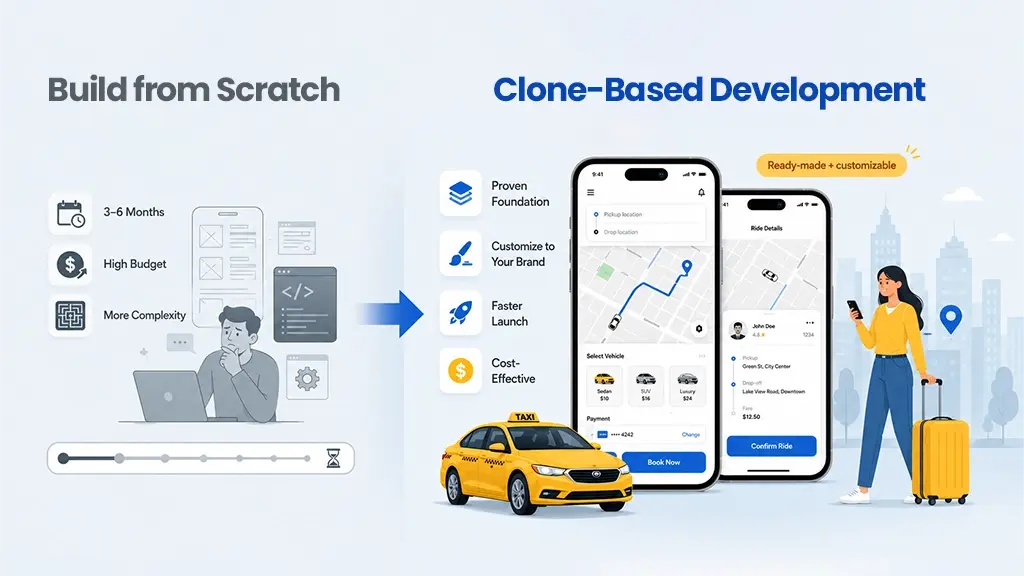
Building a taxi app completely from scratch takes 3 to 6 months and a large budget. Most startups and small businesses do not need to go through that process. A much smarter starting point is a proven, ready-made platform that you customize to your brand. That is exactly what on demand taxi app development offers. Instead of building every feature from scratch, you start with a tested foundation that already works. And personalize it to your market, your pricing, and your brand identity.
This works especially well for:
- Entrepreneurs launching a ride-hailing business for the first time.
- Taxi operators who want to take their service digital through taxi dispatch software.
- Regional businesses building a local Uber alternative
- Niche services like corporate rides, women-only cabs, or airport transfers
Conclusion
The taxi app market is growing fast and still has room for new businesses that are strategic and focus on truly serving their customers. You do not need a massive team or a million-dollar budget to compete. You need a clear plan, the right taxi app features list, and the right development partner. Start with what works. Build on a proven foundation. Launch faster. If you are ready to take the first step, explore our white label taxi app development company and find the platform that fits your goals.
FAQs
1. What is a taxi booking app in simple terms?
It is a mobile app that helps passengers to book a cab and find a cab without making phone calls or standing on the road waiting for a cab.
2. How long does it take to launch a taxi booking app?
A custom-built app can take 3 to 6 months. With a clone-based taxi booking app, you can typically launch in 2 to 3 weeks.
3. What are the most important features in a taxi app?
Live GPS tracking, upfront fare estimates, multiple payment options, in-app communication, ride scheduling, driver earnings tools, and a full admin dashboard.
4. What is the difference between a taxi app and a ride-hailing app?
A taxi app is designed to connect users to taxi drivers who have a proper license and are registered. A ride-hailing app is an app designed to connect users with a private vehicle. A lot of the apps that are designed in this same category have both of these features in the same app.
5. Can I launch a taxi app under my own brand name?
Yes, taxi booking clone solutions are fully white-label. You can add your own name, logo, and colors without changing the core functionality.




 +91-9464826889