

Our world, it never slows down, we are always on the move and with us move facilitators of our grocery needs. Everything you seek, delivered in 10 mins, doesn’t sound odd anymore. The Names of these 10 minute delivery apps are not just used as nouns anymore, they are used as verbs. If you are also a fan of QCs, you must have also questioned how these apps operate and if you want to own a QC, then this article is ideal for you.
Quick Commerce apps run through Dark stores and as the world says these are the places where the magic happens. But here’s the thing: there’s no magic involved. What’s powering your ultra-fast delivery is an incredibly efficient, tech-driven system hiding in plain sight. Now, let’s understand what a drak store is, it is a concept that’s redefining how we shop, how businesses operate, and how technology ties it all together.
What Are Dark Stores, Really?
Okay, we understand that the name ‘Dark Store’ may give off a shady vibe but there is nothing to worry about. These stores can be thought of as mini warehouses that are usually well tucked in the urban neigbourhoods. Dark stores are particularly not open for customers but they are fully optimized for rapid delivery and order fulfillment. They look a bit like convenience stores but are set up more like fulfillment centers.
They have no checkout counters and no foot traffic, a small packing crew runs them. Originally popularized by grocery delivery platforms, dark stores have since evolved into the backbone of everything. Today, they facilitate restaurant deliveries and even pharma, beauty, and pet supplies. They thrive on one key principle: proximity. The closer the store is to the customer, the faster the delivery.
Why Are Dark Stores Booming?
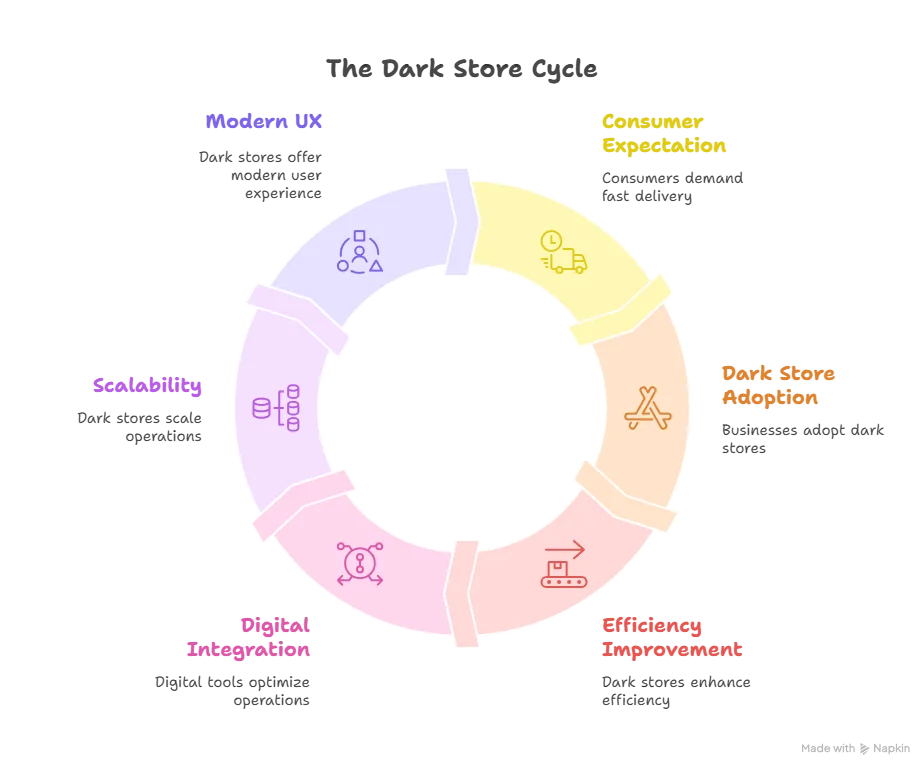
The dark store model exploded during the pandemic. But post that, they did not go anywhere like a passing trend. It’s a full-blown logistical revolution. Today’s consumer doesn’t just want fast, they expect it. And traditional retail simply can’t keep up with that expectation.
What makes dark stores a sustainable model is how efficiently they combine physical infrastructure with digital intelligence. And that’s where companies like yours—and platforms like ClonifyNow come in.
We offer ready-made, highly customizable solutions for launching on-demand delivery platforms in verticals like groceries, food delivery, and pharmacy. All these are the industries where dark stores shine brightest. You get speed along with scalability, and a modern UX, all without building from scratch.
Inside a Dark Store: How the Tech Works
Let’s zoom into a dark store in action.
Say someone places an order for a late-night snack on a delivery app. That request instantly gets routed to the nearest dark store via a centralized system. Within seconds, the order is assigned to a picker, the items are located and bagged, and a rider is dispatched. All of this is completed before the customer can refresh their tracking screen.
This kind of speed isn’t accidental. It’s orchestrated through an ecosystem of software, hardware, and data analytics. At ClonifyNow, we’ve spent years perfecting white-label platforms that power this ecosystem. We have enabled it all, from the user-facing app to the backend logistics dashboard.
Here’s what’s running behind the scenes:
A geolocation engine that auto-assigns orders to the closest dark store.
Inventory management tools that sync in real-time.
Picker optimization tools that suggest the fastest route within the store.
Delivery partner apps that minimize idle time between pickups.
With our Readyeats solutions, you get this entire infrastructure out of the box,rebranded, optimized, and tailored to fit your market.
The Business Edge: Why Entrepreneurs Are Flocking to Dark Store Models
From a startup’s perspective, dark stores solve several business headaches.
First, there’s cost. Running a dark store is cheaper than running a retail outlet. There is no requirement for any fancy interiors or cash counters or even any need for footfall.
Second, there’s speed to market. With a white-label solution like Readyeats, your dark store platform can go live in weeks, not months. It also simplifies clone vs. custom development costs, and since our scripts come with everything from live tracking to payment gateway integration, you can focus on inventory and operations instead of worrying about tech debt.
Third, there’s scalability. You can start with one location and scale to 10 or 100 with the food delivery niche ideas. No matter if you’re running a grocery app, a q-commerce startup, or a hyperlocal pharmacy service, our platforms at ClonifyNow help you expand seamlessly.
Real-World Example: How One Dark Store Model Went from Idea to Execution
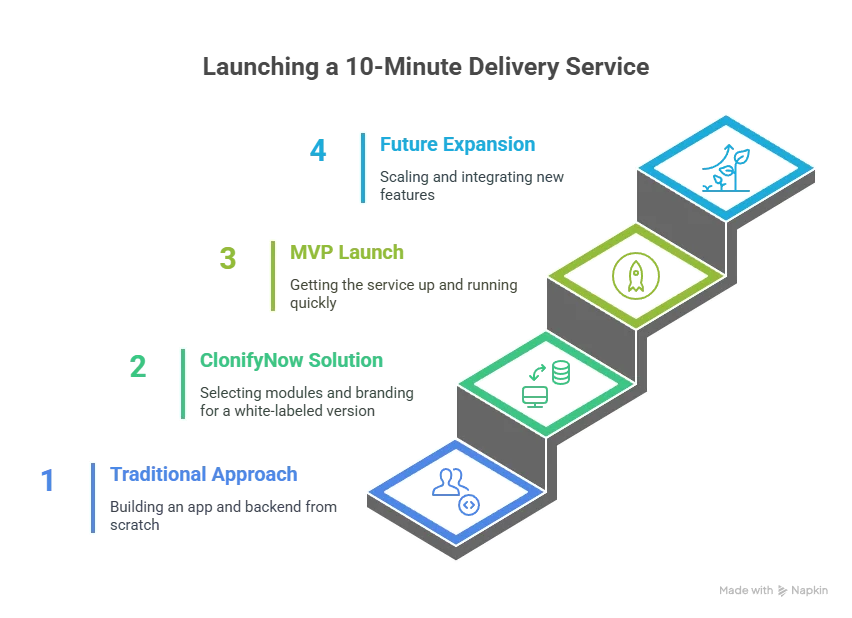
Let’s say you’re a local entrepreneur in Manchester or Miami looking to launch a 10-minute grocery delivery service and are starting an on-demand food delivery business. Traditionally, you’d need to:
Build an app from scratch.
Develop a backend to manage inventory, orders, and riders.
Integrate payment systems, mapping, and tracking.
Hire a full-stack team and wait months to launch.
With ClonifyNow, you pick a solution, then choose your branding, select your modules (grocery, pharmacy, convenience), and we spin up a white-labeled version with everything in place. It will include the mobile apps, admin panel, rider app, inventory management, even customer chat.
Your MVP could be up and running before your competitors even register their domain name.
And if you want to experiment with dark kitchen integration or third-party merchant onboarding, we’ve got you covered there as well. Our products are modular and future-ready. They are built to scale as you grow.
Are Dark Stores Here to Stay?
Some critics argue that the 10-minute delivery frenzy might not be sustainable in the long run. There are questions around gig worker conditions or long-time profitability, and the environmental impact of single-item deliveries.
But here’s what’s undeniable: customer behavior has changed. People want speed. They want precision. And increasingly, they want control.
That’s why we believe the future isn’t just fast—it’s flexible. Businesses that can combine dark store efficiency with thoughtful, tech-led platforms will lead the next wave of retail innovation.
The Future of Dark Stores: Micro, Smart, and AI-Driven
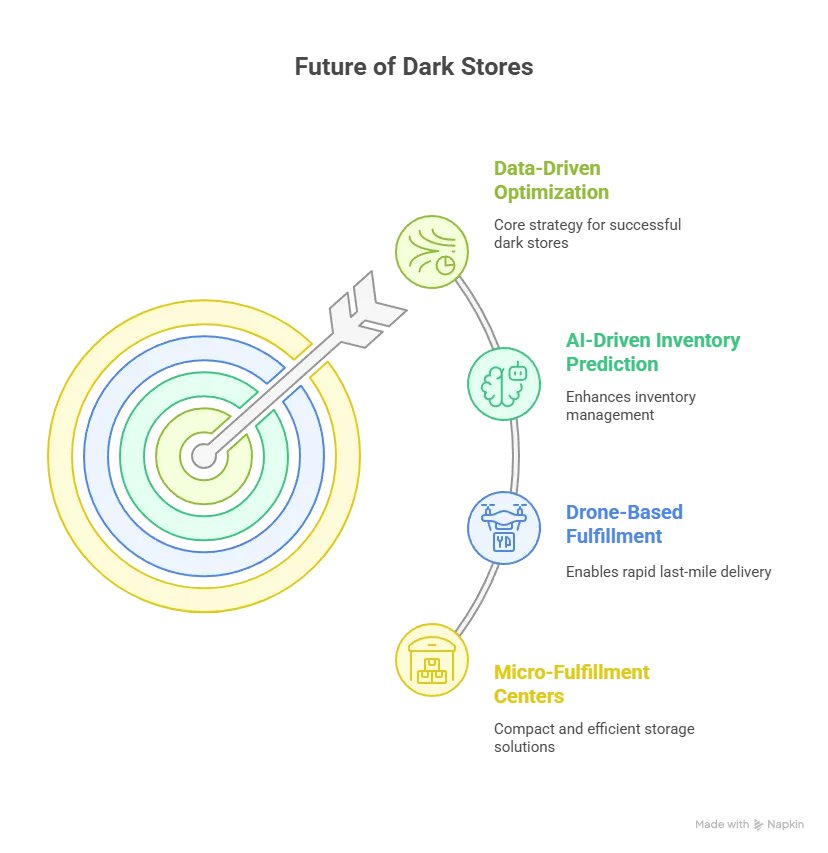
What’s next for dark stores? We’re seeing the rise of micro-fullfillment dark stores that can fit inside shipping containers. They support AI-driven inventory prediction, and drone-based last-mile fulfillment.
The most successful platforms will be those that use data intelligently. The ones that would be understanding ordering patterns by time of day. They will be optimizing SKUs per neighborhood, and even anticipating weather-related shifts in demand. That’s why our team at ClonifyNow is constantly innovating, adding AI modules and predictive analytics capabilities to our platforms.
Why ClonifyNow Is Built for This Moment?
At ClonifyNow, we specialize in rebranded white-label software solutions for high-growth, high-demand sectors. You’re launching a hyperlocal grocery app, a last-mile medicine delivery platform, or a neighborhood q-commerce startup, we gott you covered. We give you the tools to make it happen—quickly, affordably, and reliably.
Everything is pre-tested, scalable, and built for the realities of modern logistics.
Final Thoughts: You Can Build the Infrastructure, or You Can Be Left Behind
Dark stores are more than a delivery hack, they’re a sign of how commerce is evolving. Fast, invisible, hyperlocal. The brands that win will be the ones who figure out how to deliver faster, smarter, and cheaper and do it sustainably.
At ClonifyNow, we help you become that brand.
Because the future won’t wait. And with dark stores, neither will your customers.
Frequently Asked Questions
What is a dark store and how does it work?
A dark store is a small, tech-enabled warehouse designed specifically for online order fulfillment—usually for groceries, pharmacy, or convenience items.
Why are dark stores important for fast delivery businesses?
Dark stores bring inventory closer to the customer, reducing delivery time and optimizing logistics. They allow on-demand platforms to fulfill orders faster and more efficiently than traditional retail setups.
Can I launch my own dark store platform without building everything from scratch?
Yes! With white-label solutions from ClonifyNow, you can launch your own branded delivery platform in just weeks.
What types of businesses benefit from using dark stores?
Dark stores are ideal for grocery delivery, meal delivery, pharmacy dispatch, pet supply apps, and any hyperlocal e-commerce operation that needs to fulfill small orders quickly.

Aman kumar
Aman is a Content Writer/Strategist with over 3 years of experience creating content that drives engagement, builds brand authority, and supports business growth. Having worked in both agency and in-house environments, he understands how to develop content strategies that align with business objectives while meeting audience needs.


