
Managing business travel, reducing carbon emissions and simplifying regular commutes are all big problems for today’s companies. As enterprises hunt for sustainable, cost-effective mobility solutions, smart software is becoming the de facto option. But with the correct carpooling app features you may cut down on transit expenses by a significant amount, make employee logistics a lot easier and enhance workplace productivity overall.
Did you know? Carpooling is one of the most effective corporate mobility strategies, helping businesses lower transportation expenses while reducing traffic congestion and supporting sustainability goals through fewer vehicles on the road.
Clonifynow empowers organizations to create scalable and feature-rich mobility solutions aligned to their operational workflows. We will describe the must-have characteristics that optimize business operations and how to approach the development process successfully in this article.
The Strategic Value of Ride Sharing App Development
Therefore, custom ride sharing app development allows organizations to have full control of their corporate mobility ecosystem. Rather than a mix of third-party transport services or constant reimbursement of individual mileage claims, a single, seamless flow for all company travel is provided on one central platform.
Automated Route Optimization
Manual shift and route planning takes administrative resources. Smart algorithms automatically put together workers living in the same industries and create the shortest, lowest-emission routes.
Smart Grouping: Riders are matched depending on their location and shift schedules.
Real-time traffic updates: Routes on the fly to avoid delays and fuel use.
Fuel & cost tracking: Automatically calculates business expenses and carbon offsets every trip.
Real Time Fleet and Occupancy Management
If you own your own fleet of vehicles you want to know how much they’re being utilized. If you decide on a tailor made solution to ride sharing app development, your administration will have a complete view of who is in which car at all times.
Live GPS Tracking: Management may track company vehicles for safety and timeliness.
Capacity Safeguards: Ensures that vehicle use is optimised, to maximise the ROI of each trip.
Geofencing: Alerts when a company vehicle enters or leaves specific office locations.
How to Create a Rideshare App for Enterprise Needs
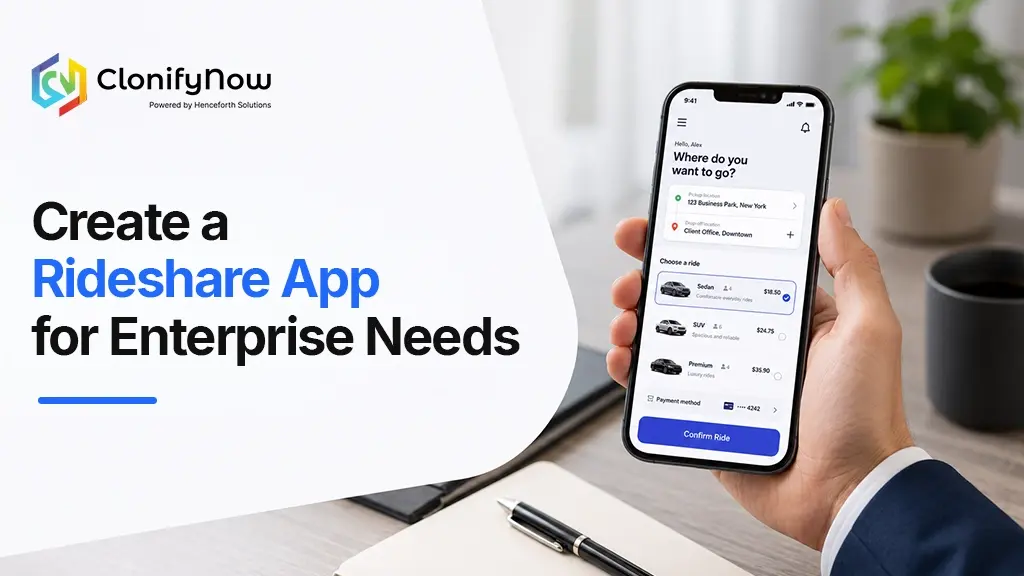
When figuring out how to create a rideshare app that truly serves a business, you should focus on enterprise-grade security, scalability and deep data analytics instead of ordinary consumer features. The platform must interface seamlessly with existing HR systems, enterprise resource planning (ERP) software and security measures.
Seamless HR and Roster Integration
A corporate transit app doesn’t exist in a vacuum. The software needs to sync with the company’s internal employee database to drive real operational efficiency.
Single Sign-On (SSO): Employees log in securely using their existing corporate credentials
Automated Shift Syncing: Automatically adjusts carpooling schedules when HR updates shift rosters or remote work days.
Instant Onboarding and Offboarding: Automatically disables app access when an employee leaves the company, protecting data security.
Data Analytics and Expense Management
A primary reason organizations learn how to create a rideshare app is to gain absolute clarity over their transit expenditures. This replaces untidy receipt submissions and manual invoicing with clean, automated digital ledgers.
Automated Invoicing: Converts trip data each month into a structured financial report for the accounting department.
Custom Analytics Dashboards: Easy to grasp visual information on total mileage saved, cost reductions and employee timeliness.
Sustainability Reporting: Offers validated information on carbon footprint reductions, which is vital for business governance and public relations.
BlaBlaCar Clone App Development for Corporate Models
Learn from winning consumer models to drastically reduce your timetable to launch. BlaBlaCar Clone App Development offers a rock-solid peer-to-peer platform that can be readily customized for verified closed-loop corporate networks. It’s consumer app usability combined with enterprise security constraints.
Peer to Peer Employee Matching
The main strength of App Development services is its foundation on community ride-sharing. And in business, it becomes a safe market where trustworthy colleagues can exchange rides.
Employee Profiles Verified: Only authentic company email addresses can register on the app.
Flexible Role Switching: For example, an employee can be a driver on Monday and a passenger on Wednesday based on their own schedule.
Internal Rating, Feedback Systems: Colleagues can offer polite feedback on the ride’s punctuality and comfort, creating trust in the workplace.
Communication and Safety Tools
In a trustworthy corporate network, clear communication routes and robust safety features are essential to keep staff safe and eliminate operational friction.
In-App Masked Calling: Riders and drivers can arrange pickups without exposing their personal phone numbers.
Automated SOS buttons: Instant link between staff and internal firm security teams or local emergency services.
ETA Sharing: Let team members or family members track the ride progress, for peace of mind during late night shifts.
Core Carpooling App Features That Maximize Business Efficiency
To design a platform that employees genuinely want to use, the user interface must be straightforward and the core utilities must be very practical. Now, let’s dive further into the precise carpooling app features that eliminate the everyday operational friction and keep the business logistics moving smoothly.
Smart Scheduling and Recurring Bookings
Employees like to have routine. Having to manually book a ride every single morning introduces unnecessary friction and reduces adoption rates.
Set and Forget Calendars: You can set your morning and evening commutes for the entire month in one go.
Instant Cancellation Alerts: If a driver calls in sick, the app immediately alerts passengers, suggesting alternative company carpools or transit options.
Standby Queues: Adds employees to a waitlist for very popular routes, automatically booking a seat in case someone else cancels.
Digital Wallets and Automated Cost Sharing
If your business strategy is for employees to share toll charges or fuel expenditures, then doing this with real currency is incredibly inefficient.
Corporate Wallet Integration: The company can provide some of the commuting expenses as digital tokens/credits directly.
Automated Split Fare Pricing: Tolls and fuel expenses are calculated accurately and deducted instantly from the passengers’ digital accounts.
Cashless Reimbursements: Accelerates internal accounting by dispensing all corporate trip stipends through the app interface.
Choosing the Right Technology Architecture
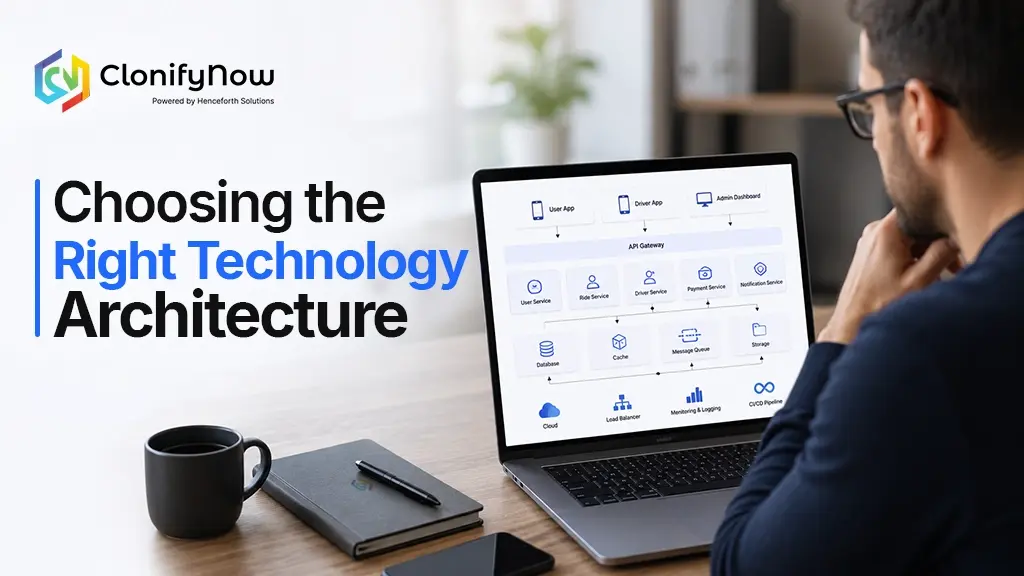
You want a secure backend, a highly responsive user interface and cross-platform interoperability to construct a reliable system. The aim is to create a light app that works flawlessly on iOS and Android smartphones without consuming battery life or adding to mobile data use.
Scalable Backend Infrastructure
Your platform should be able to handle hundreds or thousands of requests simultaneously during peak hours in the morning and evening rush without crashing.
Cloud Based Servers: Secure cloud environments are used so the app scales automatically as your workforce expands.
Real Time Database Sync: Delivers ride cancellations, location updates and chat messages with zero lag.
API First Architecture: This makes it easy to plug in third party map services, payment gateways and internal corporate databases at a later stage.
Intuitive User Experience design
If an application is hard to understand or hard to navigate, then employees will rapidly quit it and revert to their previous commuting patterns.
Minimalist Dashboards: Provides users with fast information about their upcoming ride, the driver and pickup places from the home screen.
Clear Map Visualizations: Simple, clean map interfaces display exactly where to be picked up so you don’t get lost in busy offices.
Lightweight Performance: Apps like blablacar loads instantly with streamlined code even in places with poor cell connectivity.
Launching Your Custom Corporate Commute Solution
To implement a centralized ride-sharing platform for your employees, you need to take a strategic approach. It’s about choosing the right development path, testing the software rigorously with a small control group and getting direct feedback before rolling it out across the entire enterprise.
The journey is made simpler by partnering with a dedicated platform provider such as Clonifynow. Their team takes care of all the technical complexities so you can focus entirely on your core business and change-management strategies.
Step 1: Customize the Feature Framework
Each organization has its own operational roadmap. Some companies have fixed shifts, others are very flexible and hybrid. These specific workflows should be perfectly mirrored in your app features.
Step 2: Run a Pilot Program
Before rolling out the application to thousands of workers, roll it out to a single department or a certain office building. Supervise the automated routing algorithms, review the data analytics dashboard and improve the user interface based on employee suggestions in the wild.
Step 3: Enterprise Wide Rollout and Incentivization
Pair the official app launch with clear incentives for the workplace to see the highest adoption rates. You could offer prime parking for active carpoolers, implement a gamified leaderboard rewarding carbon savings, or provide direct company commute subsidies via the digital wallet system.
Conclusion
One of the most effective ways for a modern organization to optimize transit logistics, cut unnecessary administrative costs and minimize its environmental footprint is to leverage tailored carpooling app features. With ClonifyNow, automate routing, streamline corporate expense reporting and establish a sustainable transit ecosystem using familiar, user-friendly frameworks that are good for your bottom line and your staff.
FAQs About Carpooling App Features
What are the most important carpooling app features for businesses?
Key features of carpooling apps for businesses include route optimization, employee ride matching, GPS tracking, automated scheduling, expense management and analytics dashboards for enhanced operational efficiency and reduced commuting costs.
How much does carpooling app development cost for enterprises?
Carpooling app development cost depends on the features, integrations, scalability, and the level of customization you need. Most organizations are investing in solutions that help them achieve long-term savings, workforce mobility and sustainability goals.
Can a corporate carpooling app integrate with HR and payroll systems?
Yes, today’s corporate carpooling apps can integrate with HR, payroll, ERP and attendance systems to automate employee onboarding, shift sync and transportation management.
Why are enterprises investing in ride sharing app development?
Enterprises are investing in Ride Sharing App Development to reduce transportation cost, improve employee commuting experience, reduce carbon emissions, and have better visibility of mobility operations through real-time analytics.
Is BlaBlaCar clone app development suitable for corporate transportation?
Yes, BlaBlaCar clone app development provides a proven framework for corporate ride-sharing networks, providing employee verification, secure communication, cost sharing, and efficient commute management for businesses.

Aman kumar
Aman is a Content Writer/Strategist with over 3 years of experience creating content that drives engagement, builds brand authority, and supports business growth. Having worked in both agency and in-house environments, he understands how to develop content strategies that align with business objectives while meeting audience needs.