





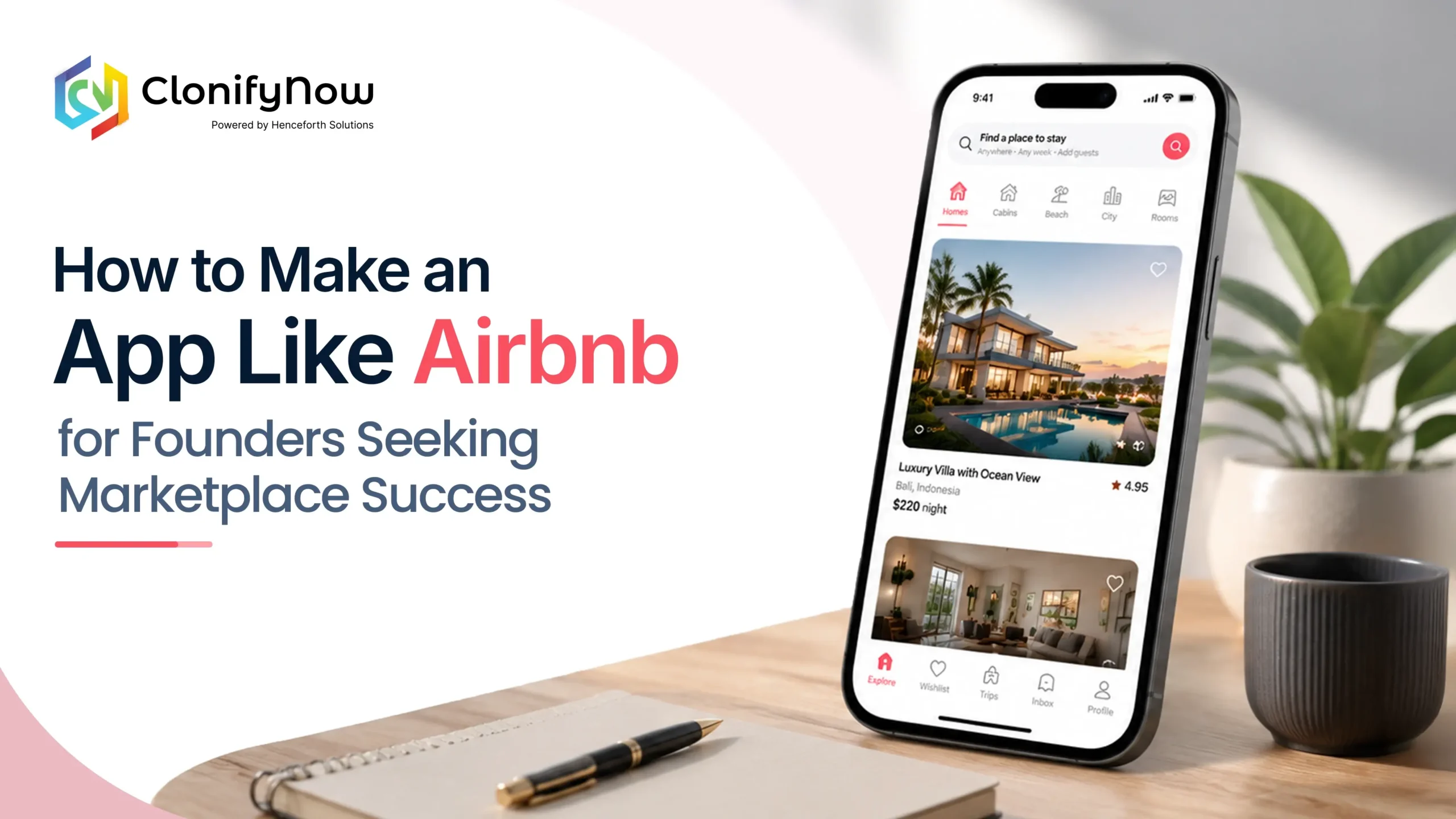
The peer-to-peer marketplace paradigm has transformed how we travel, how we obtain housing and how we develop digital enterprises. Creating a unique marketplace platform is no longer the exclusive domain of software giants. Today, it presents a significant potential for startup founders and company leaders aiming to capture a share of the thriving sharing economy. The easiest way to learn how to make an app like airbnb is to do. The best method to double-sided marketplace success to disrupt an industry
To build a platform of this size requires a smart blend of user experience, rock-solid security and scalable architecture. Navigating this landscape on your own can be difficult, which is why working with a seasoned development team like ClonifyNow can help you turn your conceptual wireframes into a fully functional revenue-generating reality.
App Like Airbnb Features and Core Architecture
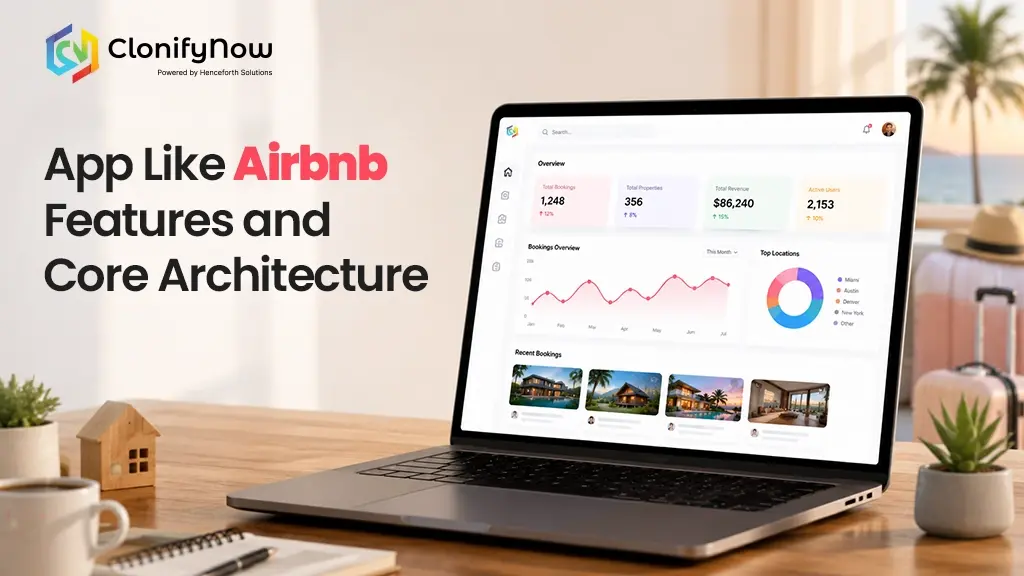
In today’s rental market, your product is not going to flourish unless it provides visitors and hosts with two very distinct types of smart, frictionless experiences. The secret sauce of every successful app like Airbnb is to achieve the proper balance between these two audiences.
Essential Guest Features
- Smart Filtering & Advanced Search: Properties can be filtered instantaneously by location, price range, dates, amenities and property kinds.
- Seamless booking engine: Provide “instant booking” and “request to book” flows to offer options for users and hosts.
- Secure Multi-Method Payments: Process global payments quickly with trusted gateways like Stripe, PayPal and Apple Pay.
- Real Time Communication: Guests are able to message hosts directly in-app to ask questions before making a booking and after.
Essential Host Features
- Property Listing Management: We have a user pleasant dashboard where hosts can upload great photographs, create informative descriptions and set prices.
- Dynamic Smart Calendar: A powerful calendar to block out unavailable dates, define seasonal pricing and sync with external calendars.
- Reservation & Earnings Tracker: Intuitive visual analytics of bookings in the pipeline, historical data and full payout summaries.
The Underlying Technology Stack
To build an app like Airbnb, it needs a strong backend to support intensive queries on the database, real-time updates, and high concurrency traffic. If you are designing a mobile application, you can deliver natively generated applications for iOS and Android from a single codebase utilising frameworks like React Native, Flutter.
On the backend, our app development services employ Node.js or Ruby on Rails with PostgreSQL to provide the stability we need to handle complicated user data, geolocation mapping APIs, and secure payment processing pipelines.
Airbnb Clone App Development Process
There’s a systematic staged method to develop to get from a corporate idea to a scalable marketplace. Jumping into coding without a defined strategy is a big reason tech firms fail. The success of Airbnb Clone App Development is based on iterative design and validation.
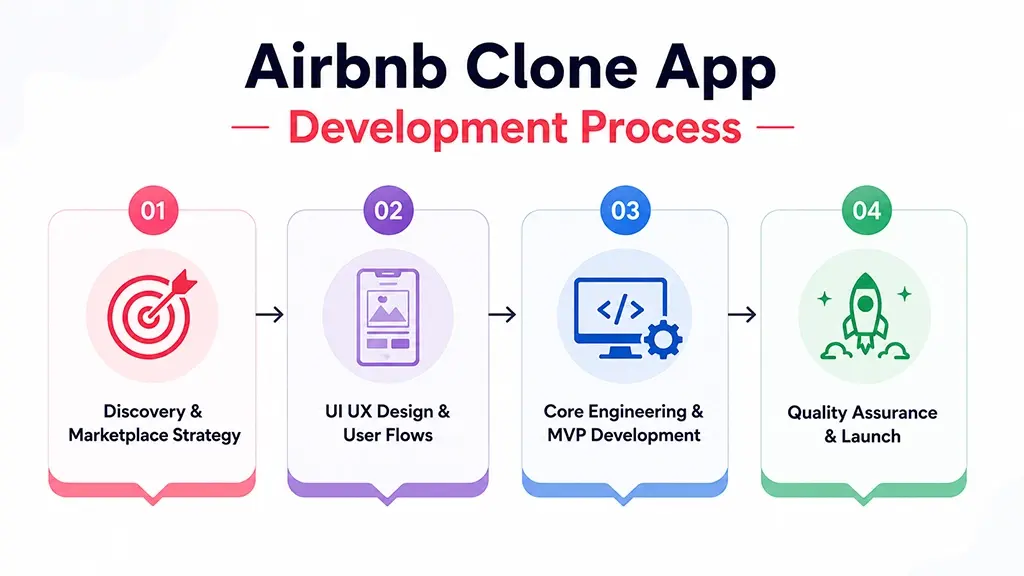
Phase 1: Discovery and Marketplace Strategy
Before you write a single line of code you must establish your speciality. Not usually worth a new startup trying to compete with global heavyweights. Or get into a niche like luxury glamping, pet-friendly workstation, or hourly event space. Get to know your user personas, learn about the local short-term-rental legislation and decide on your monetisation options, whether you will charge commission fees, listing fees or premium memberships.
Phase 2: UI UX Design and User Flows
The user experience will make or break the marketplaces. Your design team has to build high-fidelity wireframes to decrease friction to complete a booking. Think mobile first. Make your navigation thumb-friendly, your material very readable and your checkout process as brief as feasible.
Phase 3: Core Engineering and MVP Development
During the main stage of Airbnb Clone App Development, developers build the backend architecture, set up databases, and integrate third-party APIs for maps, SMS notifications, and identity verification. First off, focus on constructing an MVP (minimum viable product). By starting with just the necessities, not burning through your entire capital reserves early on, you can collect real life user feedback.
Phase 4: Quality Assurance and Launch
Automatically and thoroughly test across a range of device sizes and operating systems. Watch out for edge circumstances, such booking a property in different time zones, or transactions happening at the same time. Once the platform is entirely solid, proceed to launch your apps on the Apple App Store and Google Play Store.
How Much Does It Cost to Build an Airbnb Clone Globally
One of the most essential considerations a founder or leader of an organization will make is budgeting for a marketplace launch. The total capital requirement will be very different based on where you are, the size of your development team, and the complexity of the feature set. Understanding how much does it cost to build an airbnb clone requires breaking down expenses by development regions and project phases.
Estimating the Total Financial Investment
If you opt for a custom solution from scratch with an agency, a basic MVP will usually take between 800 and 1,200 development hours. When calculating how much does it cost to build an airbnb clone, a foundational MVP built in a highly competitive development hub generally ranges between $3,000 and $6,000. But if you want highly customised enterprise architecture, advanced AI-driven recommendation engines, or multi-currency global systems, the cost can quickly scale past $6,000.
Using production ready frameworks from experts like Clonifynow can help you optimize these costs and speed up your time-to-market. With that you can significantly reduce your initial money outlay and still be at elite performance levels.
Strategic Growth and Scaling Your Rental Marketplace
The real effort comes after your platform is live in the app stores. The two sided marketplace problem is a typical chicken-and-egg conundrum: You need hosts to attract visitors but you need guests to keep your hosts satisfied. Learning how to make an app like airbnb is only half the battle; the other half is masterfully scaling your operations.
Solving the Double Sided Market Dilemma
- Seed the Supply Side First: Before you kick off any major guest marketing campaigns, put a tonne of effort into getting good hosts in one city or niche category.
- Offering Onboarding Incentives: To make your platform highly attractive, you can waive commission fees for the first 100 hosts who sign up or offer free professional photography for their listings.
- Hyper Local Marketing Strategies: Use targeted local SEO, collaborate with local tourism boards, and engage micro-influencers to create organic trust in your initial rollout zones.
Launching Your Marketplace Journey?
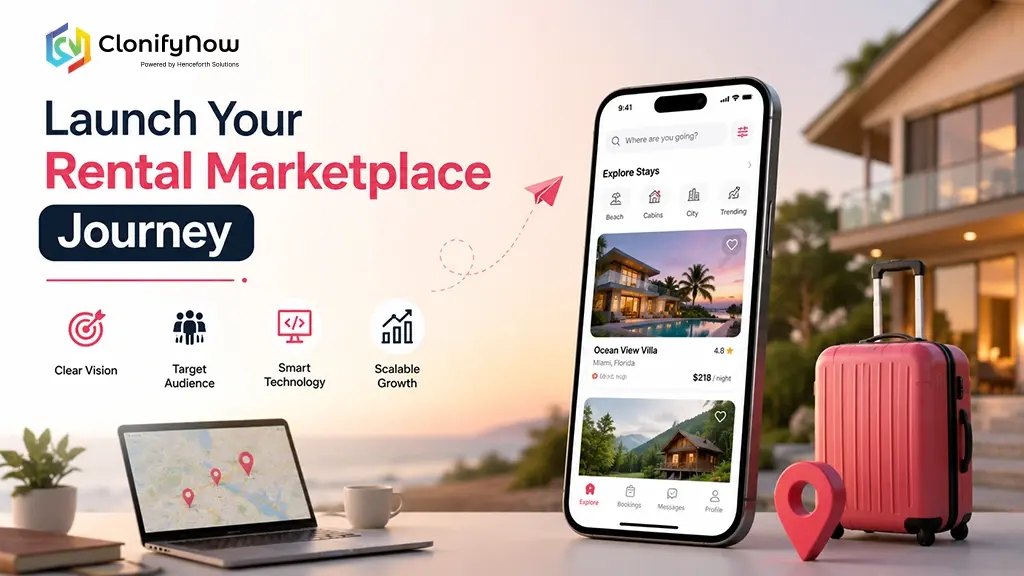
To establish a modern scalable rental marketplace, you need a clear vision, a comprehensive understanding of your target audience, and an experienced technology partner. From conceptualizing user journeys to evaluating how much does it cost to build an airbnb clone, every single decision you make sets the foundation for your future business growth.
A successful digital brand is one that concentrates on a niche, produces an optimised MVP and iterates on real user data to build a very profitable brand. If you want to get to market fast and secure, the team at Clonifynow delivers you the elite technical skills, scalable software design and dedicated support to develop a world-class service like Airbnb and own your business sector.


 +91-9464826889