





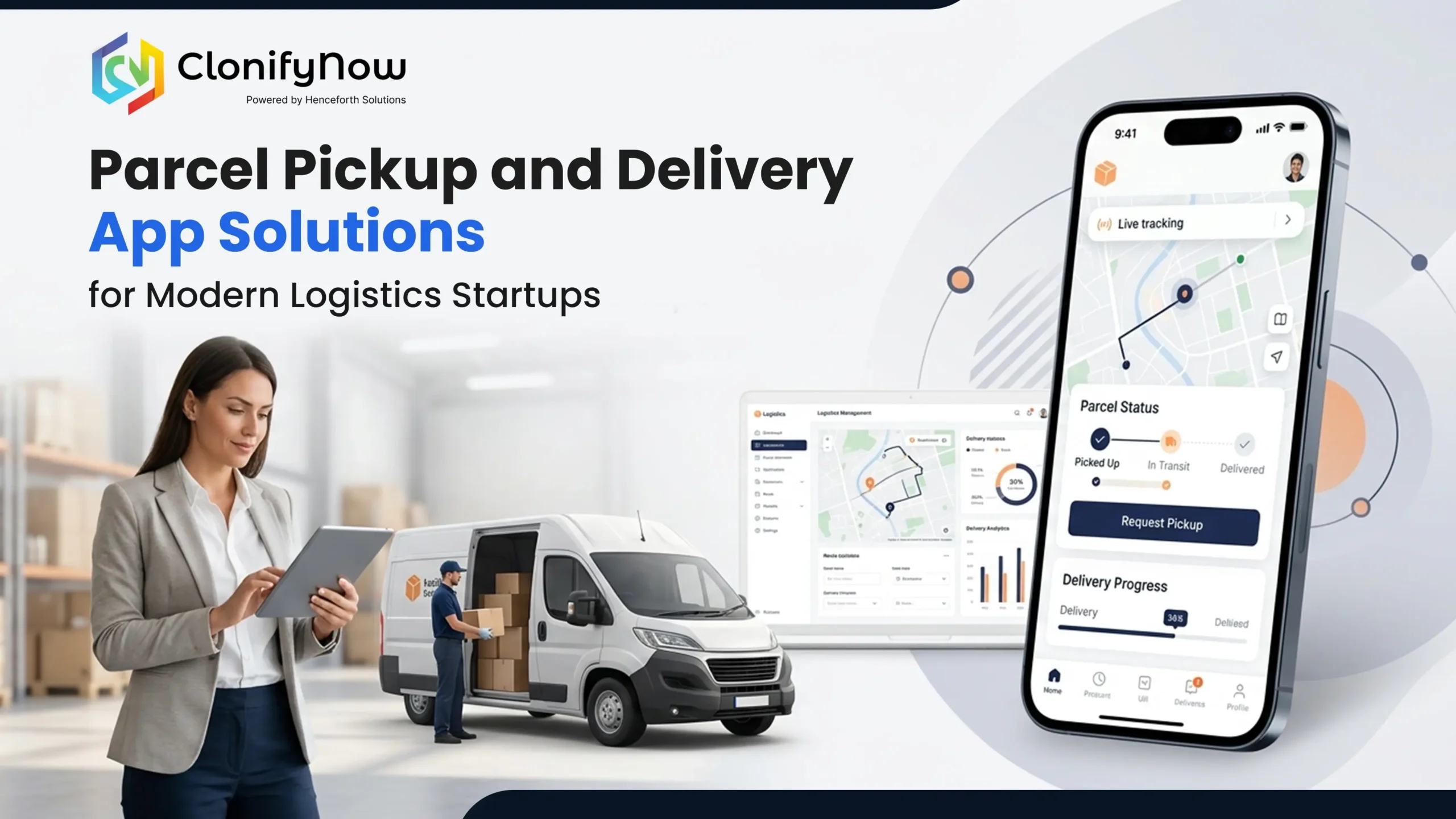
Big changes are coming to the logistics industry as e-commerce demands soar and consumer expectations evolve, the need for hyper-efficient, localized shipping is stronger than ever. To enter this market, modern logistics firms require a solid, simple digital infrastructure, not just a fleet of vehicles.
Did You Know? The global last-mile delivery market is valued at approximately $201 billion in 2025 and is projected to grow at a 12% compound annual rate through 2029. For retailers competing with Amazon’s delivery dominance, mastering last-mile logistics is no longer optional.
A personalized parcel pickup and delivery app is no longer a luxury, it is the heart of your business operations. If you are a corporate decision-maker wanting to improve your supply chain or a startup founder planning to disrupt the industry, learning how to design, deploy and scale this technology is vital to your success.
Why Modern Startups Need a Dedicated App for Courier Delivery
A strong digital presence is required to grab a piece of the market. Which is why firms like ClonifyNow are helping businesses build robust white-labeled platforms to tackle these very operational difficulties and offer them the foundation they need to battle head-to-head with the titans of the industry.
Meeting the On-Demand Consumer Surplus
Today’s shoppers consider delivery applications as ride-sharing or meal delivery. What they want is to open an app for courier delivery, put in an address and have a courier show up at their door within minutes. A dedicated mobile app connects demand and supply automating order placements, effortlessly processing payments and instantaneously calculating routes.
Streamlining Fleet and Driver Management
An app for courier delivery is more than a customer-facing portal. This is a control centre for operations.
- Automated Dispatching: Parcels are matched with drivers using algorithms that consider proximity and vehicle capacity.
- Driver Performance Tracking: See delivery speeds, completion rates, and customer ratings all from one dashboard.
- Less Overhead: When your fulfillment volume grows, you can keep your processes lean by removing human dispatch coordinators.
Key Features to Include in an On Demand Courier App
In logistics, building a successful platform is about balancing the needs of three main user groups: the consumer, the delivery person and your internal operations team. This is not a plug-and-play application by any stretch of the imagination. To set yourself apart from the competition, your on demand courier app should include an integrated ecosystem of dedicated panels.
1. The Customer Interface
The consumer experience ought to be absolutely friction free Once customers get on to your on demand courier app, this should be a no brainer to book a pickup.
- Booking Flexibility: Users should be able to book an instant on demand pickup or schedule deliveries for a later time.
- Transparent Pricing Tiers: Show the customer an estimate of the charges based on the parcel weight, dimensions and delivery speed before the user approves the order.
- Multiple Payment choices: Effortlessly connect credit/debit cards, digital wallets and cash-on-delivery (COD) choices.
2. The Driver Companion App
Drivers are the heart and soul of your logistics startup. If their interface is complicated or clumsy, it will take longer to fill orders.
- Smart Navigation: Built-in GPS connectivity (Google Maps or Apple Maps) for real-time route updates based on traffic conditions.
- Order Management Toggle: An easy “Go Online/Offline” button for gig workers or independent contractors to toggle their availability.
- Earnings Dashboard: A simple breakdown of your earnings every day, week and month, including tips and bonuses.
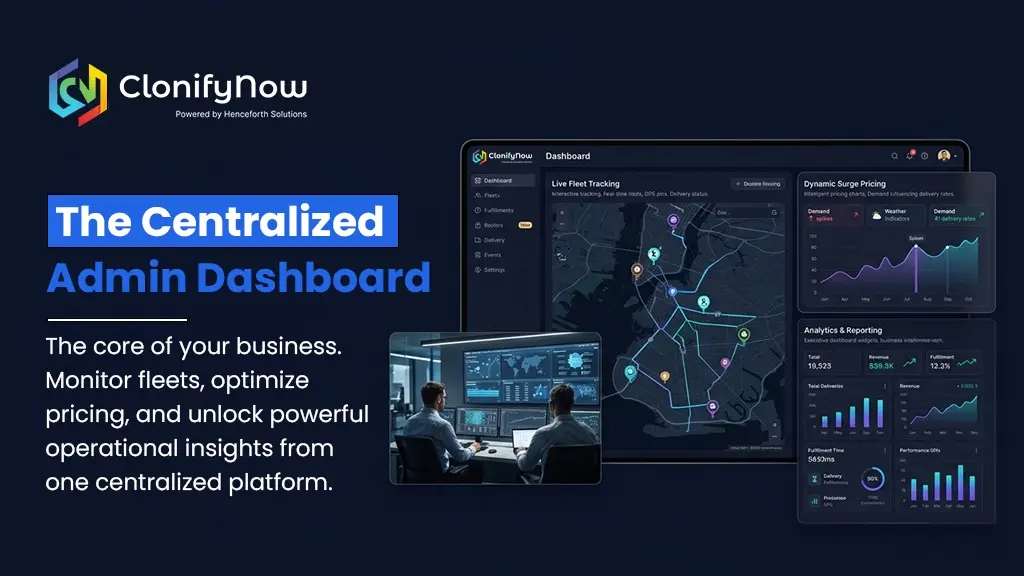
3. The Centralized Admin Dashboard
This is the core of your business. The admin panel provides enterprise decision makers & operations managers with a complete view into the entire ecosystem.
- Live Fleet Tracking: Live map for tracking all active couriers for operational efficiency.
- Dynamic Surge Pricing: Adjust delivery algorithms to increase prices during high demand periods or adverse weather conditions to match supply and demand.
- Analytics & Reporting: Download statistics on total deliveries, average fulfillment times and revenue growth to make data driven business decisions.
Overcoming the Last Mile Delivery App Bottleneck
The last mile of the logistics process – the transportation of a shipment from a local distribution center to the customer’s doorstep – is recognized to be the most expensive and inefficient section of the supply chain. Studies suggest that the last mile of logistics can make up as much as 53% of the total shipment costs.
Startups may tackle these inefficiencies head-on by establishing a dedicated last mile delivery app with smart automation and intelligent data use.
Advanced Route Optimization Algorithms
A quality last mile delivery app isn’t only about connecting the dots between point A and point B. Sophisticated algorithms are used to calculate the most efficient multi-stop routes. The software monitors traffic patterns, time windows and vehicle limits to guarantee drivers drop off the most amount of goods using the minimum amount of fuel.
Digital Proof of Delivery (PoD)
Lost goods or fraudulent claims can destroy a startup’s bottom line. To minimize this danger, a modern last mile delivery app includes a variety of secure proof of delivery options:
- Photo Capture: Drivers must snap a photo of the package left in a safe location.
- Signatures in-app Customer Signature on Driver’s Smartphone Screen
- OTP Verification To complete delivery, the driver will need to provide a secure one-time password sent to the customer’s phone.
Real-Time Predictive ETA Tracking
The customer dislikes waiting in the dark. Real-time countdowns to the minute help a lot in relieving customer tension and minimizing the number of support tickets hitting your customer service team.
The secret to reaching this level of technological expertise without investing years in development is to work with an established technology provider. Whether you choose an on-demand pickup and delivery app development company or a specialized logistics technology partner, Clonifynow Engineering teams offer a powerful, off-the-shelf, pre-configured software framework built to tackle the challenging last mile routing and live tracking, saving startups thousands of hours of development effort.
Calculating the Total Cost to Develop a Courier Delivery App
One of the most typical questions startup founders and business owners ask is “How much money do I need to make this happen?” What is the Cost of Developing a Courier Delivery App? It depends on your development partner, how long your feature list is, and your launch timeline.
Factors That Influence the Development Budget
Here are the major variables to be considered while budgeting the cost to develop a courier delivery app:
- Custom vs Whitelabel: Building from scratch costs way more. Pre-built, scalable source code from platforms like Clonifynow can help you reduce your time-to-market and total development budget by more than half.
- Developers’ Geographic Location: Development companies from North America or Western Europe request higher hourly rates than highly-skilled engineering teams from Eastern Europe or Asia.
- 3rd-Party API Integrations: The costs are calculated on the number of paid services you require, such as Twilio for SMS Notifications, Google Maps for routing, and Stripe or PayPal for processing payments.
Step-by-Step Strategic Roadmap for Launching Your Platform
Building a successful platform requires a deliberate, step-by-step approach. Moving straight into coding without a clear strategy is a recipe for budget overruns.
Phase 1: Deep Market Research and Niche Selection
Don’t try to compete with FedEx or Amazon on day one. Instead try to find an under-served niche in your local market. This may comprise:
- B2B Medical Supply Courier Services
- Hyper local, same day grocery or food delivery.
- Transport of fragile high value art and documents
Phase 2: Design the User Journey (UI/UX)
Your software must be incredibly straightforward to use. Collaborate with UI/UX Designers to create wireframes and progress them into low-fidelity to high-fidelity interactive prototypes. Test these prototypes with real users and drivers to work out friction areas before a line of code is written.
Phase 3: Develop a Minimum Viable Product (MVP)
Your first launch should have only fundamental capabilities. Reliable parcel pickup and delivery app where user can place order, driver can accept the order and admin can track the order. Don’t introduce vanity features like AI powered chat bot assistants until you’ve verified your main business model with paying clients.
Phase 4: Launch, Iterate, and Scale
Publish your app to Apple App Store and Google Play. Keep getting ongoing input from your early adopters and drivers. Improve your dispatch algorithms with real world usage data, eradicate issues and put out additional features incrementally.
Driving Digital Transformation in Modern Logistics
The logistics and courier business is experiencing unprecedented growth rate. The firms that thrive and dominate the market are the ones who use technology to deliver speed, clarity and perfect convenience.
Investing in a high-performance parcel pickup and delivery app is the most definitive step your firm can take to ensure its place in the contemporary supply chain. So if you get the optimization right, spend sensibly for the development costs and focus on providing a frictionless user experience you can create a logistics empire that is highly profitable and future-proof.
FAQs about Parcel Pickup and Delivery App
1. What are the main elements of an on-demand courier delivery app?
The current on-demand courier delivery apps should work effectively with live GPS tracking, automatic dispatching, digital proof of delivery, ETA notifications, various payment channels and driver management dashboards.
2. How can last-mile delivery apps minimize logistical costs?
Lower fuel expenses and missed deliveries with a last mile delivery app that reduces delivery costs by using AI to optimize routes, auto-assign drivers, track in real-time and offer digital proof of delivery.
3. Why are startups choosing white label courier app solutions?
Startups are looking for a white-label courier app solution which can be deployed faster, with lower costs of development, configurable branding and scalable logistics infrastructure to avoid extensive custom development cycles.
4. What is the best technology stack for courier delivery app development?
Courier delivery apps typically use a combination of technologies such as Flutter or React Native for the mobile app, Node.js for backend services, Google Maps APIs, Stripe for payment processing, and cloud platforms to ensure scalability.


 +91-9464826889